Astrology for Beginners: A Simple Guide
Introduction
Astrology for beginners can feel confusing at first because it includes many different ideas, such as zodiac signs, planets, birth charts, and cosmic patterns. However, the basic concept is simple: astrology is a system that studies the connection between the positions of celestial objects and human experiences.
For thousands of years, people have looked at the sky to understand personality traits, emotions, relationships, and life patterns. Today, many people explore astrology as a tool for self-reflection and personal growth.
Learning astrology does not require advanced knowledge. Anyone can start by understanding the twelve zodiac signs, the meaning of planets, and how a birth chart works. This guide explains the basics in simple language so beginners can build a strong foundation.
Whether you are curious about your own zodiac sign, want to understand your personality better, or simply want to learn how astrology works, this beginner-friendly guide will help you understand the key concepts step by step.
What Is Astrology and How Does It Work?
Astrology is the study of the relationship between the movements of planets, stars, and other celestial bodies and human life. It is based on the idea that the position of the planets at the time of a person’s birth can provide insights into their personality, emotions, and natural tendencies.
Astrology is different from astronomy. Astronomy is a scientific study of space, planets, and stars, while astrology is a belief system that focuses on symbolic meanings connected to celestial movements.
Many cultures developed their own forms of astrology. Western astrology, Vedic astrology, and Chinese astrology are some of the most well-known traditions. Each system has unique methods, but they all focus on understanding patterns connected to the sky.
For beginners, astrology starts with three main elements:
- Zodiac signs
- Planets
- Birth charts
These three parts create the foundation for understanding how astrologers interpret personal traits and life themes.
Understanding Zodiac Signs in Astrology
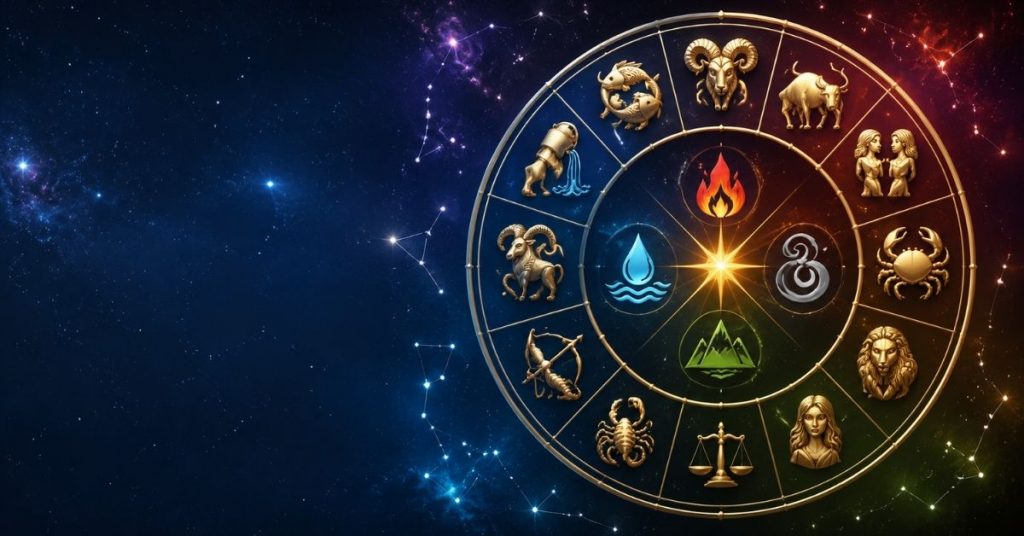
The zodiac is a circle divided into twelve sections, with each section representing a different sign. These signs are connected to specific dates of the year and are often associated with different personality characteristics.
Your zodiac sign is determined by the position of the Sun when you were born. This is why people often ask, “What is your zodiac sign?” when discussing astrology.
The twelve zodiac signs are divided into four main elements:
- Fire signs
- Earth signs
- Air signs
- Water signs
Each element represents different qualities and ways of approaching life.
Fire Signs: Aries, Leo, and Sagittarius
Fire signs are often connected with energy, confidence, creativity, and passion. People associated with fire signs are usually described as enthusiastic and action-oriented.
Aries is considered a sign connected with leadership and courage. Leo is linked with creativity, confidence, and self-expression. Sagittarius is often associated with exploration, learning, and adventure.
Fire signs are known for taking initiative and following their goals with strong motivation.
Earth Signs: Taurus, Virgo, and Capricorn
Earth signs are connected with stability, practicality, and responsibility. They are often described as realistic thinkers who prefer planning and structure.
Taurus is linked with patience and determination. Virgo is associated with organization and attention to detail. Capricorn is connected with ambition and long-term success.
People influenced by earth signs often focus on building secure foundations in life.
Air Signs: Gemini, Libra, and Aquarius
Air signs are connected with communication, ideas, and social connections. They are often curious and enjoy exchanging thoughts with others.
Gemini is associated with learning and adaptability. Libra is linked with balance and relationships. Aquarius is connected with innovation and independent thinking.
Air signs usually enjoy exploring new concepts and different viewpoints.
Water Signs: Cancer, Scorpio, and Pisces
Water signs are connected with emotions, intuition, and sensitivity. They are often described as deeply connected with feelings and personal experiences.
Cancer is associated with care and emotional connection. Scorpio is linked with transformation and intensity. Pisces is connected with imagination and compassion.
Water signs often pay close attention to emotions and hidden meanings.
The Meaning of Planets in Astrology
In astrology, planets represent different areas of human experience. Each planet has a symbolic meaning that astrologers use when interpreting a birth chart.
The main planets used in astrology include:
Sun
The Sun represents identity, confidence, and personal expression. It is considered one of the most important parts of a birth chart because it relates to your basic personality.
When people talk about their zodiac sign, they usually mean their Sun sign.
Moon
The Moon represents emotions, feelings, and inner reactions. It is often connected with how people process experiences and respond emotionally.
Many astrologers consider the Moon sign important for understanding emotional needs.
Mercury
Mercury represents communication, thinking, and learning style. It is associated with how people share ideas and process information.
Venus
Venus represents love, relationships, beauty, and personal values. Astrologers often study Venus when discussing attraction and relationship patterns.
Mars
Mars represents motivation, action, courage, and ambition. It is connected with how people pursue goals and handle challenges.
Jupiter
Jupiter is associated with growth, knowledge, opportunities, and expansion. It is often considered a planet connected with learning and personal development.
Saturn
Saturn represents discipline, responsibility, patience, and life lessons. It is connected with long-term growth and commitment.
What Is a Birth Chart?
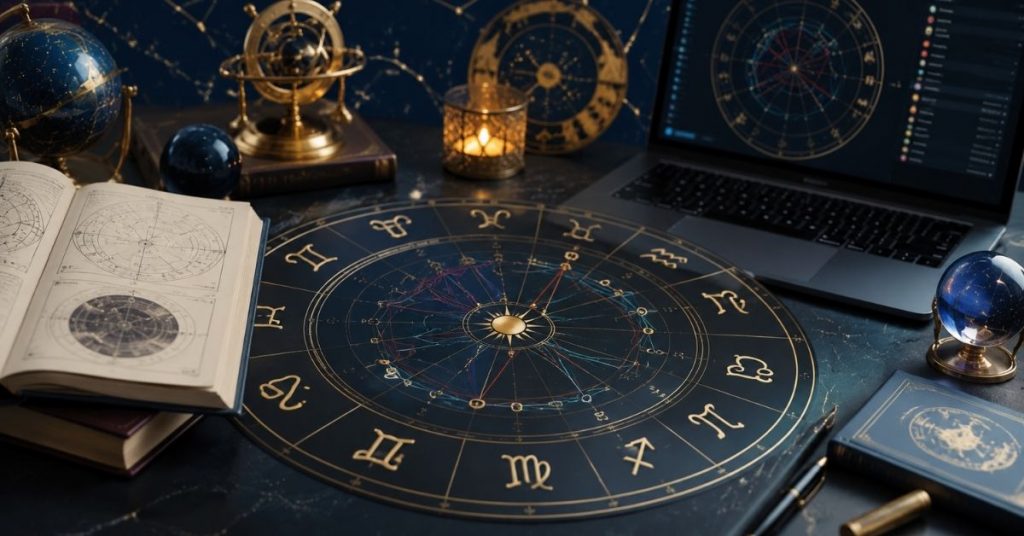
A birth chart is a map of the sky at the exact moment and location of a person’s birth. Astrologers use this chart to analyze the positions of planets and their symbolic meanings.
A birth chart includes several important parts:
- Zodiac signs
- Planet positions
- Houses
- Astrological aspects
Your birth chart is more detailed than simply knowing your Sun sign. Two people can have the same zodiac sign but different birth charts, which may create different personality patterns.
The Importance of Birth Time
The exact birth time is important because it helps determine the rising sign and house placements.
The rising sign, also called the ascendant, represents how a person appears to others and how they approach new situations.
Without an accurate birth time, some parts of a birth chart may not be calculated correctly.
Understanding Astrological Houses
Astrological houses are another important part of learning astrology for beginners. A birth chart is divided into twelve houses, and each house represents a different area of human life.
While zodiac signs describe personality qualities and planets represent different energies, houses show where those energies appear in life.
For example, a planet placed in the career house may influence professional goals, while a planet placed in the relationship house may relate to personal connections.
The twelve houses cover different life areas:
- First House: Self-image, personality, appearance, and personal identity
- Second House: Money, possessions, values, and financial habits
- Third House: Communication, learning, siblings, and daily thinking
- Fourth House: Home, family, roots, and emotional foundation
- Fifth House: Creativity, romance, hobbies, and self-expression
- Sixth House: Work routines, health habits, and responsibilities
- Seventh House: Partnerships, marriage, and close relationships
- Eighth House: Transformation, shared resources, and deep emotions
- Ninth House: Travel, philosophy, education, and beliefs
- Tenth House: Career, reputation, and public image
- Eleventh House: Friendships, communities, and future goals
- Twelfth House: Spirituality, hidden emotions, and personal reflection
For beginners, houses may seem complicated, but the basic idea is simple: they show which part of life an astrological influence relates to.
The Role of the Rising Sign in Astrology
The rising sign is one of the most discussed parts of a birth chart. It represents the zodiac sign that was rising on the eastern horizon at the exact time of birth.
Many astrologers believe the rising sign influences how people present themselves to the world. It is often connected with first impressions, communication style, and natural reactions.
For example, someone with a Leo rising may appear confident and expressive, while someone with a Virgo rising may seem practical and organized.
The rising sign does not replace your Sun sign. Instead, it works together with your Sun and Moon signs to create a more complete picture.
A simple way to understand these three important signs is:
- Sun sign: Your core identity and personality
- Moon sign: Your emotions and inner world
- Rising sign: Your outer personality and first impression
Many astrology beginners start with these three because they provide an easy introduction to reading a birth chart.
Different Types of Astrology Explained
Astrology has developed into many different systems around the world. Each tradition has its own methods and interpretations.
Understanding the different types can help beginners choose the approach that interests them most.
Western Astrology
Western astrology is one of the most popular systems today. It is based mainly on the tropical zodiac, which connects zodiac signs with the seasons.
This system focuses on:
- Birth charts
- Zodiac signs
- Planetary movements
- Astrological aspects
Many modern horoscope websites and apps use Western astrology.
Vedic Astrology
Vedic astrology, also known as Jyotish, comes from ancient Indian traditions. It uses the sidereal zodiac, which considers the actual positions of constellations.
Vedic astrology places strong importance on:
- Karma
- Life purpose
- Planetary periods
- Spiritual growth
It often uses detailed calculations to analyze different stages of life.
Chinese Astrology
Chinese astrology follows a different system based on years rather than months. Each year is connected with an animal sign.
The twelve Chinese zodiac animals include:
- Rat
- Ox
- Tiger
- Rabbit
- Dragon
- Snake
- Horse
- Goat
- Monkey
- Rooster
- Dog
- Pig
Chinese astrology also considers elements such as wood, fire, earth, metal, and water.
How Beginners Can Read Their Birth Chart
Reading a birth chart may look difficult at first because it contains many symbols and details. However, beginners can start with a simple approach.
The first step is to find your main placements:
Step 1: Identify Your Sun Sign
Your Sun sign is based on your birth date. It provides information about your basic personality and natural strengths.
For example, someone born between March 21 and April 19 has Aries as their Sun sign.
Step 2: Find Your Moon Sign
Your Moon sign requires your birth date, location, and usually your exact birth time.
It provides insight into emotional reactions, comfort needs, and personal feelings.
Step 3: Discover Your Rising Sign
The rising sign requires accurate birth information. It helps explain how you interact with the outside world.
Step 4: Look at Planet Placements
After understanding the main signs, beginners can explore where planets appear in their chart.
For example:
- Venus can provide insights about relationships
- Mars can show motivation style
- Mercury can explain communication patterns
Step 5: Study Patterns Instead of Single Placements
One common beginner mistake is focusing on only one part of a chart.
Astrologers usually look at the complete picture because different placements can influence each other.
A birth chart is not about one sign deciding everything. It is a combination of different symbolic patterns.
Benefits of Learning Astrology
Many people explore astrology because it offers a different way to think about personality, emotions, and personal growth.
Although astrology is not considered a science, many individuals use it as a reflection tool to understand themselves better.
Better Self-Awareness
Astrology encourages people to think about their strengths, habits, emotions, and personal challenges.
For example, someone may use astrology to reflect on whether they prefer routine, adventure, creativity, or social interaction.
This type of self-reflection can help people understand their choices more clearly.
Understanding Relationships
Many people study astrology to explore relationship dynamics.
Astrology may help individuals think about communication styles, emotional needs, and differences between people.
Some use zodiac compatibility as a fun way to start conversations about relationships.
Personal Reflection and Growth
Astrology can encourage people to examine their goals, values, and life decisions.
A birth chart may act as a personal reflection tool that helps individuals ask meaningful questions about themselves.
Learning About Different Cultures
Astrology has existed across many civilizations, including ancient Babylon, Greece, India, and China.
Studying astrology also introduces people to historical traditions and cultural beliefs.
CCommon Astrology Myths Beginners Should Know
Astrology is a popular topic that people discuss across the internet, social media, and online communities. However, many myths and misunderstandings surround this subject. Beginners should learn what astrology can realistically offer and what it cannot prove.
Understanding these myths helps new learners approach astrology with a balanced mindset. Astrology can be an interesting tool for self-reflection, but people should avoid treating it as a guaranteed explanation for every part of life.
Myth 1: Astrology Predicts Everything
Many people believe astrology can predict every event that will happen in a person’s future. This is one of the most common misunderstandings about astrology.
In reality, many astrology followers use it to explore personal patterns, emotions, and possible tendencies rather than exact future events. Astrology often focuses on reflection and awareness instead of providing certain predictions.
People can use astrology to think about their choices, habits, and personal growth, but they still make their own decisions and shape their own future.
Myth 2: Your Zodiac Sign Defines Your Entire Personality
Some beginners believe their zodiac sign completely explains who they are. However, astrology includes much more than just a Sun sign.
A complete birth chart contains different elements, including planets, houses, and other placements. These factors create a more detailed picture of a person’s personality.
For example, two people may share the same zodiac sign but have completely different personalities because their other chart placements differ.
Myth 3: Astrology and Astronomy Are the Same
Many people confuse astrology with astronomy because both subjects involve planets, stars, and space.
Astronomy is a scientific field that studies celestial objects, space systems, and physical events using research and observation.
Astrology is a belief system that interprets symbolic meanings connected with celestial movements. Although both subjects study the sky, they follow different methods and purposes.
Myth 4: Astrology Is Only About Horoscopes
Some people think astrology only means reading daily horoscope predictions. However, horoscopes represent only one small part of astrology.
A complete astrology system also includes birth charts, planetary meanings, zodiac signs, houses, and different interpretation methods.
Learning astrology involves understanding how these different parts connect rather than only reading short daily predictions.
How Astrology Is Used in Modern Life
Modern technology has made astrology easier to access than ever before. People now explore astrology through mobile apps, websites, social media platforms, and online learning communities.
Many individuals use astrology in different ways, including:
- Reflecting on personal thoughts and emotions
- Understanding personality traits
- Exploring relationship patterns
- Learning about cultural traditions
- Finding creative inspiration
Today, many people view astrology as a tool for curiosity and self-exploration rather than a strict guide that controls their decisions.
For beginners, astrology can provide a structured way to think about personal experiences, behaviors, and life choices.
Astrology and Personality Understanding
Many people search for astrology for beginners because they want to understand their personality better. They often wonder why they think, react, and communicate in certain ways.
Astrology connects zodiac signs, planets, and birth chart placements with different personality characteristics. Traditional astrology associates some signs with confidence and leadership, while others connect with creativity, emotions, or communication.
However, astrology does not suggest that every person with the same zodiac sign will behave in exactly the same way. Each birth chart contains different combinations that create unique personality patterns.
Beginners can use astrology as a self-reflection tool. It can help them explore their strengths, habits, challenges, and personal preferences.
Instead of asking, “Does my zodiac sign control my life?” beginners can ask:
- What personality patterns can I understand about myself?
- Which strengths can I improve?
- Which areas of my life need more attention?
This approach allows people to use astrology as a way to learn more about themselves.
Personality Traits of the Twelve Zodiac Signs
Astrology associates each zodiac sign with specific traditional qualities. These descriptions represent common interpretations used in astrology.
Aries
Aries represents the first zodiac sign and connects with qualities like leadership, courage, and independence.
People associated with Aries often enjoy taking action and facing challenges. They usually prefer starting new projects and moving toward their goals with confidence.
Their strengths often include motivation, determination, and a willingness to lead.
However, Aries individuals may need to practice patience because their desire for quick results can sometimes lead to rushed decisions.
Taurus
Taurus is an earth sign traditionally connected with stability, patience, and reliability.
People associated with Taurus often value security, comfort, and steady progress. They usually prefer building strong foundations instead of making sudden changes.
Their strengths include loyalty, dedication, and persistence.
However, they may need to become more adaptable when unexpected situations require change.
Gemini
Gemini is an air sign linked with communication, curiosity, and learning.
People associated with Gemini often enjoy discovering new information and connecting with different people.
Their strengths include adaptability, creativity, and strong communication skills.
They may need to improve their focus when they become interested in many ideas at the same time.
Cancer
Cancer is a water sign connected with emotions, family, and care.
People associated with Cancer often show strong emotional awareness and deep connections with their loved ones.
Their strengths include empathy, imagination, and supportiveness.
They may need to create healthy emotional boundaries to avoid feeling overwhelmed by others’ feelings.
Leo
Leo is a fire sign associated with confidence, creativity, and self-expression.
People connected with Leo often enjoy sharing ideas and bringing positive energy into social situations.
Their strengths include leadership, generosity, and creativity.
They can grow further by balancing confidence with the ability to listen and understand others.
Virgo
Virgo is an earth sign linked with organization, analysis, and improvement.
People associated with Virgo often enjoy solving problems and paying attention to details.
Their strengths include responsibility, planning, and practical thinking.
They may need to avoid focusing too much on perfection and learn to accept mistakes as part of growth.
Libra
Libra is an air sign connected with balance, relationships, and harmony.
People associated with Libra often value cooperation and peaceful communication.
Their strengths include fairness, diplomacy, and understanding different viewpoints.
They may sometimes find decision-making difficult because they carefully consider many possibilities.
Scorpio
Scorpio is a water sign associated with passion, transformation, and emotional depth.
People connected with Scorpio often show determination and strong commitment toward their goals.
Their strengths include loyalty, intuition, and focus.
They may benefit from expressing emotions openly instead of keeping everything inside.
Sagittarius
Sagittarius is a fire sign connected with adventure, exploration, and learning.
People associated with Sagittarius often enjoy discovering new places, ideas, and cultures.
Their strengths include optimism, curiosity, and independence.
They may need to develop patience when handling repetitive tasks and responsibilities.
Capricorn
Capricorn is an earth sign linked with ambition, discipline, and responsibility.
People associated with Capricorn often focus on achieving long-term goals through careful planning.
Their strengths include dedication, persistence, and strong work habits.
They should also create balance between professional goals and personal relaxation.
Aquarius
Aquarius is an air sign associated with innovation, originality, and independent thinking.
People connected with Aquarius often enjoy exploring new ideas and creating unique solutions.
Their strengths include creativity, vision, and problem-solving abilities.
They may need to focus more on emotional communication and personal connections.
Pisces
Pisces is a water sign connected with imagination, compassion, and intuition.
People associated with Pisces often show creativity and emotional understanding.
Their strengths include kindness, empathy, and artistic thinking.
They may need to build confidence and develop practical decision-making skills.
Zodiac Compatibility and Relationships
Zodiac compatibility remains one of the most popular topics in astrology. Many people explore it to understand relationships, friendships, and communication styles.
Astrologers often compare zodiac signs to identify possible similarities and differences between people.
Traditional astrology connects similar elements with certain relationship qualities:
- Fire signs often share energy, enthusiasm, and passion.
- Earth signs often value stability and practical support.
- Air signs often connect through communication and ideas.
- Water signs often connect through emotions and understanding.
However, people should not use astrology compatibility as the only factor when choosing or judging relationships.
Strong relationships depend on real-life qualities such as:
- Trust
- Communication
- Respect
- Shared values
- Emotional support
Astrology can provide interesting conversation points, but personal effort, understanding, and actions create the foundation of healthy relationships.
How to Start Learning Astrology Step by Step
Many beginners feel overwhelmed because astrology includes many terms and concepts. The best approach is to learn slowly and build knowledge over time.
Start With the Basics
Begin by learning:
- The twelve zodiac signs
- The four elements
- The meanings of planets
- The twelve houses
These concepts create the foundation for understanding more advanced topics.
Study Your Own Birth Chart
Your own chart is usually the easiest place to start.
Learning about your Sun, Moon, and rising signs can help you understand how different parts of astrology connect.
Instead of memorizing everything, focus on understanding the meaning behind each placement.
Keep an Astrology Journal
Writing down observations can help beginners organize their learning.
You can record:
- Important chart placements
- Personal reflections
- Questions about astrology concepts
- New information you discover
A journal helps connect theory with personal experiences.
Learn From Reliable Sources
The internet contains a lot of astrology information, but not everything is accurate or explained clearly.
Beginners should compare information from multiple sources and avoid websites that make extreme promises.
A good learning source explains concepts clearly and respects different viewpoints.
Common Mistakes Astrology Beginners Make
Learning astrology takes time. Many beginners make similar mistakes when they first start exploring the topic.
Focusing Only on One Zodiac Sign
A common mistake is believing one zodiac sign explains everything about a person.
A birth chart includes many different placements, and each one adds another layer of interpretation.
Trying to Memorize Everything Quickly
Astrology contains many symbols, terms, and systems.
Trying to learn everything at once can make the process confusing.
A better approach is to master one concept at a time.
Treating Astrology as a Fixed Rule
Astrology interpretations are not meant to remove personal choice.
People still make their own decisions and shape their own lives.
Ignoring Personal Experience
Astrology becomes more meaningful when people connect concepts with self-reflection.
Personal experience and real-life understanding are important parts of learning.
Astrology Tools for Beginners
When learning astrology for beginners, having the right tools can make the process easier and more enjoyable. Beginners do not need expensive courses or complicated software to start understanding astrology.
A simple approach with basic resources is enough to build a strong foundation.
Today, many online tools help people create birth charts, learn zodiac meanings, and explore planetary positions. These tools can save time and make difficult concepts easier to understand.
Some useful astrology tools for beginners include:
Birth Chart Calculators
A birth chart calculator creates a map of the sky based on your:
- Date of birth
- Exact birth time
- Birth location
It shows the positions of planets, zodiac signs, and houses at the moment you were born.
For beginners, a birth chart calculator is one of the best starting points because it gives a personal example to study.
Instead of only reading general zodiac descriptions, you can explore how different placements appear in your own chart.
Astrology Books
Books remain one of the best ways to learn astrology because they usually explain concepts in a structured way.
Beginner-friendly astrology books often cover:
- Zodiac sign meanings
- Planet symbolism
- Birth chart basics
- House interpretations
- Astrology history
Reading from reliable authors can help beginners avoid confusion caused by short online posts that provide incomplete information.
Astrology Apps
Many people use mobile apps because they make learning convenient.
Astrology apps can provide:
- Daily horoscope updates
- Birth chart information
- Planetary movements
- Learning materials
Apps are useful for exploring astrology casually, but beginners should focus on learning the basic concepts instead of depending only on daily predictions.
Astrology Communities
Online communities can help beginners exchange ideas and learn from other people interested in astrology.
Discussion groups, forums, and educational platforms allow learners to ask questions and explore different interpretations.
However, beginners should always think critically and compare information from multiple sources.
Is Astrology Worth Learning?
Many people wonder whether learning astrology is worth their time. The answer depends on what someone expects from it.
For many beginners, astrology is valuable because it provides a structured way to explore personality, emotions, and personal experiences.
People often enjoy astrology because it encourages self-questioning.
For example, astrology may encourage someone to think about:
- How they communicate with others
- What motivates them
- How they handle emotions
- What personal qualities they want to improve
However, astrology should be approached with realistic expectations.
It should not replace professional advice, scientific information, or important life decisions. Instead, many people use it as a reflection tool or a way to explore traditional beliefs.
The value of astrology often comes from the questions it inspires rather than simple answers.
A person learning astrology may become more aware of their habits, preferences, and relationships.
Astrology and Personal Growth
One reason astrology continues to attract interest is its connection with personal growth.
Many people use astrology as a method for self-reflection. By exploring their birth chart, they may identify personal strengths and areas where they want to improve.
For example, someone may discover that they naturally prefer planning and structure. Another person may recognize that they enjoy creativity and change.
Astrology discussions can encourage people to think about their personality from different perspectives.
Some common personal growth areas people explore through astrology include:
- Self-confidence
- Communication skills
- Emotional awareness
- Goal setting
- Relationship patterns
The most useful approach is to treat astrology as a conversation with yourself rather than a strict guide.
The History and Cultural Importance of Astrology
Astrology has a long history that stretches across many civilizations.
Ancient societies studied the sky to track seasons, understand time, and create cultural traditions connected with celestial events.
Babylonian astrologers developed early systems for connecting planets and signs with human experiences. Later, Greek and Roman traditions influenced Western astrology.
In India, Vedic astrology developed as part of ancient philosophical traditions. Chinese astrology created its own system based on animals, elements, and cycles.
Different cultures created unique interpretations, but they shared a common interest: understanding patterns in the universe.
Studying astrology history helps beginners understand that astrology is not a single system. It is a collection of traditions that evolved over thousands of years.
Modern Astrology in the Digital Age
The internet has changed how people discover and learn astrology.
In the past, astrology knowledge was often shared through books, personal teachers, or traditional communities.
Today, beginners can access:
- Online birth chart tools
- Educational videos
- Astrology podcasts
- Digital courses
- Social media communities
This accessibility has made astrology popular among younger audiences who enjoy exploring personality and self-discovery topics.
Social media has also introduced astrology to millions of new users through short videos, zodiac content, and daily discussions.
However, digital astrology also creates challenges because simplified content can sometimes remove important context.
Beginners should look beyond quick zodiac posts and learn the deeper concepts behind astrology.
How Long Does It Take to Learn Astrology?
The time required to learn astrology depends on how deeply someone wants to study it.
A beginner can understand basic concepts within a few weeks by learning:
- Zodiac signs
- Planet meanings
- Houses
- Birth chart basics
Developing a deeper understanding can take months or years because astrology includes many layers of interpretation.
A good learning path is:
First Month
Focus on:
- Zodiac signs
- Elements
- Personal birth chart
- Major planets
After Several Months
Explore:
- Houses
- Planet relationships
- Astrological aspects
- Different astrology systems
Advanced Learning
Study:
- Complex chart interpretations
- Historical traditions
- Advanced techniques
The key is consistency. Small daily learning sessions are often more effective than trying to study everything at once.
Practical Ways to Use Astrology Knowledge
Beginners often ask how they can apply astrology knowledge in everyday life.
Astrology can be used in several personal ways:
Self-Reflection
You can use astrology concepts as prompts for journaling and thinking about your personality.
Questions like these can encourage reflection:
- What are my natural strengths?
- How do I respond to challenges?
- What habits do I want to improve?
Understanding Communication Styles
Astrology discussions often explore different communication approaches.
Learning about different signs may help people think about why individuals express themselves differently.
Exploring Creativity
Many artists, writers, and creative individuals explore astrology for inspiration.
Symbolic ideas from astrology can provide new perspectives for creative projects.
Learning About Traditions
Astrology provides a way to explore historical beliefs and cultural practices from around the world.
Final Thoughts
Learning astrology for beginners is a journey that starts with simple concepts and gradually becomes more detailed.
The best way to begin is by understanding the basics: zodiac signs, planets, houses, and birth charts.
Astrology has attracted human curiosity for centuries because it offers a unique way to explore personality, emotions, and life experiences.
While astrology is not a replacement for science or professional guidance, many people find value in using it for reflection, creativity, and personal exploration.
A beginner does not need to know everything immediately. The most important step is staying curious and learning one concept at a time.
Whether you explore astrology for fun, self-awareness, or cultural interest, it can become an interesting subject that encourages deeper thinking about yourself and the world around you.
Frequently Asked Questions
What is the easiest way to start learning astrology?
The easiest way to start learning astrology is by understanding the twelve zodiac signs, the four elements, and the meanings of major planets. After that, beginners can explore their own birth chart to connect concepts with personal examples.
Is astrology difficult to learn?
Astrology can seem complicated because it includes many symbols and concepts, but beginners can learn it step by step. Starting with basic ideas makes the process much easier.
What are the three most important parts of a birth chart?
The Sun sign, Moon sign, and rising sign are often considered important starting points. They represent identity, emotions, and outward personality.
Can astrology predict the future?
Astrology is often used for reflection and interpretation rather than guaranteed future predictions. Many people view it as a tool for understanding patterns and possibilities.
What is the difference between astrology and astronomy?
Astronomy is the scientific study of space and celestial objects. Astrology is a belief system that interprets symbolic meanings connected with celestial movements.
Which astrology system is best for beginners?
Western astrology is often easier for beginners because many learning resources focus on zodiac signs, planets, and birth charts. However, different systems may interest different people.