
Astrology is an ancient practice that explores the relationship between the movements of celestial bodies and human life. From understanding your zodiac sign to exploring your personality through a birth chart, astrology offers a symbolic way to think about personal traits, relationships, emotions, and different stages of life. Many people start with daily horoscopes, but there is much more to astrology than reading predictions based on your birthday. This guide explains what astrology is, how it works, its different elements, and how beginners can use it to understand the subject more deeply.
My advice is to start with the basics rather than trying to understand every planet, zodiac sign, and astrological term at once. Once you understand the main ideas, the rest becomes much easier to follow.
What Is Astrology and Why Is It Important?
Astrology is a traditional belief system that interprets the positions and movements of the Sun, Moon, planets, and other celestial points to explore possible connections with human personalities and experiences. It is based on the idea that the arrangement of celestial bodies at a particular moment, especially the moment of birth, carries symbolic meaning.
In simple terms, astrology uses the sky as a symbolic map. Astrologers study this map to interpret personality characteristics, emotional tendencies, relationships, and possible life themes. These interpretations are commonly presented through zodiac signs, horoscopes, and personalized birth charts.
For example, someone born between March 21 and April 19 is generally considered an Aries in Western tropical astrology. Traditional Aries interpretations often emphasize independence, confidence, enthusiasm, and a willingness to take initiative.
However, astrology is not limited to zodiac signs. Your complete astrological chart includes several planetary positions, twelve houses, and relationships between celestial points. Each element contributes a different part of an astrological interpretation.
A Brief History of Astrology
Astrology has a long history that stretches back thousands of years. Ancient civilizations observed the movements of celestial bodies to understand seasonal changes, organize calendars, and interpret events.
Early astrological traditions developed in Mesopotamia, particularly in Babylonian culture. Over time, these ideas influenced Greek, Roman, Indian, Chinese, and other cultural traditions. Astrology also became an important subject in parts of the medieval Islamic world, where scholars studied celestial movements and translated earlier astronomical and astrological writings.
NASA+1
Western astrology eventually developed into the zodiac-based system that many people recognize today. It uses twelve signs and interprets planetary positions through an individual’s birth chart.
It is important to understand that astrology and astronomy are now separate disciplines. Astronomy is a scientific field that studies celestial objects using observation and evidence, whereas astrology interprets celestial positions through traditional symbolic beliefs. The American Astronomical Society explains this distinction in its guide to astronomy and astrology.
American Astronomical Society+1
Why Do People Follow Astrology?
People explore astrology for different reasons. Some enjoy reading daily horoscopes, while others are interested in learning about their personalities, emotional patterns, or relationship dynamics.
Common reasons include:
- Self-reflection: Exploring traditional interpretations of personal strengths and challenges.
- Relationships: Understanding how different zodiac signs are traditionally interpreted together.
- Personal interest: Learning about planets, houses, zodiac signs, and astrological history.
- Entertainment: Enjoying daily, weekly, and monthly horoscope readings.
- Cultural traditions: Exploring astrological practices passed down through different societies.
My take: Astrology becomes more interesting when you look beyond simple predictions and learn how its different elements fit together. It can provide a framework for reflection, but it should not replace personal judgment or reliable information when making important decisions.
10 Important Elements of Astrology Every Beginner Should Understand
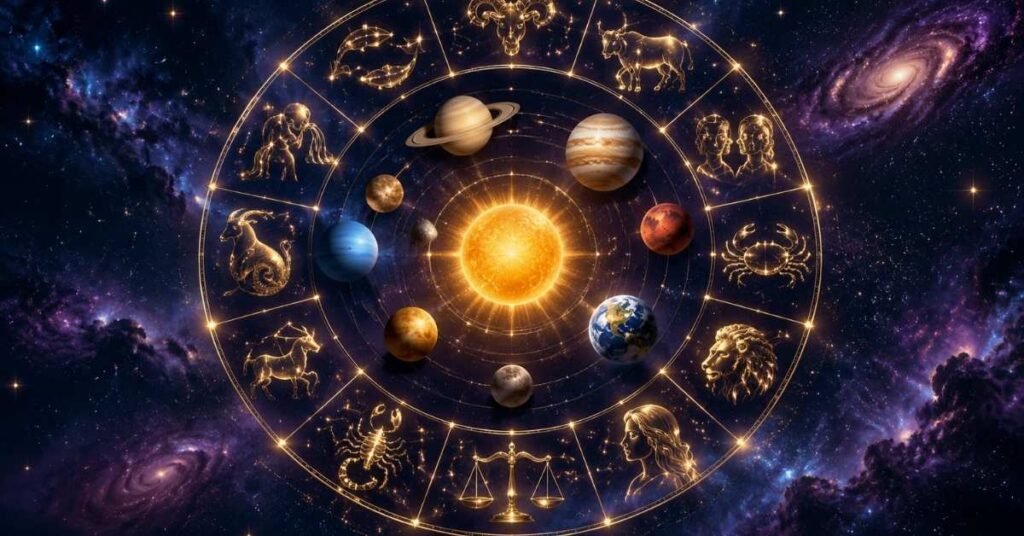
Astrology has several connected elements, and understanding them individually makes it easier to interpret a horoscope or birth chart. Here are ten important concepts worth learning.
1. Zodiac Signs
Zodiac signs are twelve sections of the zodiac used in Western astrology. Each sign is traditionally associated with particular personality characteristics, symbolic meanings, and behavioral tendencies.
The twelve signs are Aries, Taurus, Gemini, Cancer, Leo, Virgo, Libra, Scorpio, Sagittarius, Capricorn, Aquarius, and Pisces.
Who it suits best: Beginners who want an easy introduction to astrology or enjoy reading daily and monthly horoscopes.
One thing to watch out for: Your zodiac sign does not describe your entire personality. A complete birth chart includes several other important placements.
Practical tip: Start by learning your Sun sign, its element, and its ruling planet before exploring more complicated astrological concepts.
2. Sun Sign Astrology
Your Sun sign is determined by the Sun’s apparent position within the zodiac at the time of your birth. It is probably the most familiar part of astrology because most newspaper and online horoscopes are based on it.
In traditional interpretations, the Sun represents identity, self-expression, confidence, and personal direction. For example, Leo is associated with creativity and visibility, while Virgo is traditionally linked with organization and attention to detail.
Who it suits best: People who want a simple introduction without needing their exact birth time.
One thing to watch out for: Sun sign descriptions are general interpretations and cannot explain every aspect of someone’s personality.
Practical tip: Read about your Sun sign’s strengths and challenges, but avoid treating every description as a fixed statement about who you are.
3. Moon Signs
Your Moon sign represents the zodiac sign in which the Moon was positioned when you were born. In astrology, the Moon is associated with emotions, instincts, comfort, and private feelings.
For instance, a person with a Cancer Moon might traditionally be described as emotionally sensitive and family-oriented, while an Aquarius Moon is often associated with independence and a more analytical approach to emotions.
Who it suits best: People interested in emotional patterns, personal relationships, and understanding why they sometimes respond differently from their Sun sign descriptions.
One thing to watch out for: Moon sign interpretations are symbolic. They should not be treated as psychological assessments or diagnoses.
Practical tip: Find your Moon sign using a birth chart calculator. You will generally need your birth date, time, and location.
4. Rising Signs or Ascendants
Your rising sign, also known as your Ascendant, is the zodiac sign appearing on the eastern horizon at the time and location of your birth.
Astrologers traditionally associate it with first impressions, outward behavior, and the way someone approaches unfamiliar situations. It also determines the starting point of the twelve houses in many birth chart systems.
Unlike the Sun sign, the rising sign changes relatively quickly throughout the day. This makes an accurate birth time particularly important.
Who it suits best: People who want a more detailed understanding of their birth chart beyond their Sun and Moon signs.
One thing to watch out for: An estimated birth time can produce an incorrect Ascendant or house placement, particularly if the time is close to a sign change.
Practical tip: Check your birth certificate or another reliable record before calculating your rising sign.
5. Planets in Astrology
Planets are among the most important elements of astrological interpretation. Each planet represents a different symbolic area of human experience.
For example, Mercury is associated with communication and thinking, Venus with love and personal values, and Mars with action and motivation. Jupiter is traditionally linked with expansion, while Saturn represents structure, responsibility, and limitations.
Modern Western astrology also includes Uranus, Neptune, and Pluto, which are associated with broader themes of change, imagination, and transformation.
Who it suits best: Readers who want to understand how astrologers interpret different personality themes and planetary placements.
One thing to watch out for: A planet’s meaning changes depending on its zodiac sign, house, and relationship with other planets.
Practical tip: Learn the traditional meanings of the Sun, Moon, Mercury, Venus, and Mars first. These provide a useful foundation for understanding a birth chart.
6. The Twelve Astrological Houses
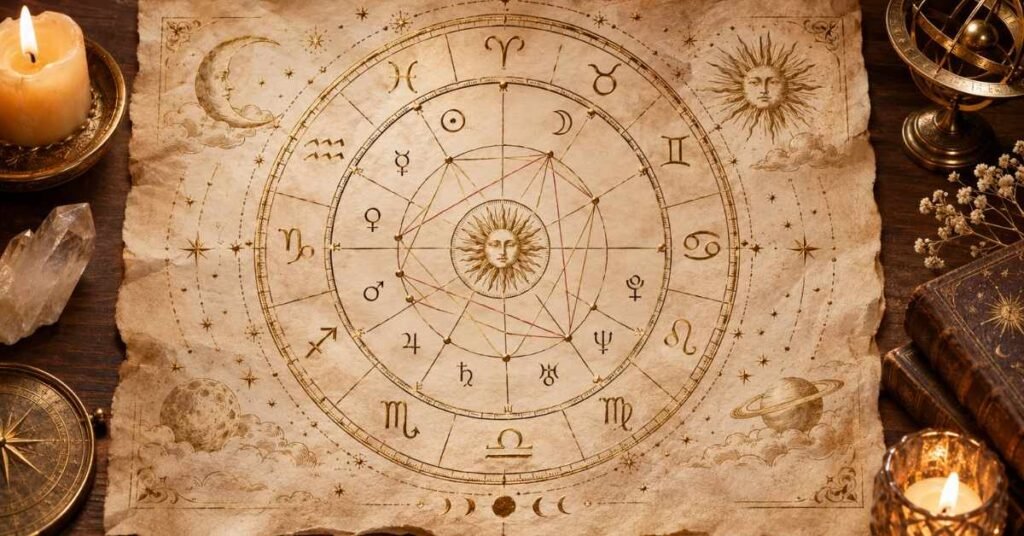
The twelve houses divide a birth chart into different areas of life. While zodiac signs describe the symbolic style of an astrological placement, houses represent the areas where astrologers interpret those themes.
For example, the first house is associated with identity and appearance, the seventh with partnerships, and the tenth with career and public reputation.
Each house has a separate traditional meaning, covering subjects such as finances, communication, family, creativity, health routines, relationships, and long-term ambitions.
Who it suits best: People who already understand zodiac signs and want to explore complete birth chart interpretations.
One thing to watch out for: House placements depend on birth time, location, and the house system being used. Different systems can produce different house boundaries.
Practical tip: Begin by identifying your first, fourth, seventh, and tenth houses. These are commonly discussed when exploring identity, home, relationships, and career.
7. Astrological Aspects
Aspects describe the angular relationships between planets and other significant points in a birth chart. Astrologers use these relationships to interpret how different symbolic influences interact.
Some commonly discussed aspects include conjunctions, oppositions, squares, trines, and sextiles.
For example, a conjunction occurs when two celestial points appear close together in the chart, while an opposition places them approximately 180 degrees apart. A square represents a 90-degree relationship and is traditionally associated with tension or challenges.
Who it suits best: Intermediate learners who want to move beyond individual planetary meanings.
One thing to watch out for: Aspects cannot be interpreted accurately by looking at their names alone. The planets involved and their wider chart context matter.
Practical tip: Learn the five major aspects before exploring minor aspects or advanced chart interpretations.
8. Planetary Transits
Planetary transits refer to the current or future positions of planets compared with the placements in someone’s birth chart.
Astrologers use transits to discuss changing themes and periods. For example, a Saturn transit is traditionally interpreted through responsibility, patience, structure, and long-term commitments.
A Jupiter transit may be associated with opportunities, expansion, learning, or personal growth.
Who it suits best: People interested in monthly and yearly astrological forecasts rather than only general zodiac descriptions.
One thing to watch out for: A transit does not guarantee that a particular event will happen. Interpretations are symbolic, not reliable predictions of future outcomes.
Practical tip: If you follow transit readings, pay attention to the planet involved and the house it is passing through in your birth chart.
9. Synastry and Relationship Astrology
Synastry is a method of comparing two birth charts to explore relationship dynamics through traditional astrological interpretations.
Astrologers examine planetary connections between the charts, particularly those involving Venus, Mars, the Moon, Mercury, and the seventh house.
For example, Venus placements are commonly discussed when interpreting affection and relationship preferences, while Mercury placements are associated with communication styles.
Who it suits best: People curious about romantic relationships, friendships, family dynamics, or communication differences.
One thing to watch out for: Astrological compatibility should never be used as the only basis for choosing a partner or evaluating a relationship.
Practical tip: Focus on communication, mutual respect, and shared values in real relationships. Treat synastry as an interesting interpretive exercise rather than a compatibility test.
10. Different Astrological Traditions
Astrology is not one universal system. Different cultures have developed their own methods, calculations, and interpretations.
Western astrology commonly uses the tropical zodiac, while Vedic astrology, also called Jyotisha, generally uses a sidereal zodiac. Chinese astrology follows a different tradition that includes a twelve-animal zodiac cycle and other elements.
These systems have different historical backgrounds and should not be treated as interchangeable.
Who it suits best: Curious readers who want to understand astrology beyond the familiar Western zodiac signs.
One thing to watch out for: Mixing calculations from different systems without understanding their differences can create confusion.
Practical tip: Choose one tradition to study first. Once you understand its basic principles, compare it with other systems to see how their interpretations differ.
Quick Comparison: Different Types of Astrology Readings
Not every astrology reading answers the same question. Some focus on personality, while others explore relationships or current planetary movements.
The following table compares six commonly discussed reading types.
| Reading type | Information needed | Main focus | Best use |
| Sun sign horoscope | Birth date | General zodiac themes | Daily guidance and entertainment |
| Natal chart | Date, time, location | Complete birth chart | Exploring personality themes |
| Moon sign reading | Birth date and usually time | Emotions and instincts | Emotional self-reflection |
| Transit reading | Birth chart and current date | Current planetary movements | Understanding astrological cycles |
| Synastry reading | Two birth charts | Relationship dynamics | Exploring compatibility themes |
| Solar return | Birth details and return chart data | Yearly astrological themes | Annual chart interpretation |
My take: A natal chart is a useful starting point for anyone who wants to understand astrology beyond daily horoscopes. It brings together zodiac signs, planetary positions, houses, and aspects in one place.
What to Discuss Before Booking an Astrology Reading or Purchasing a Report
If you are considering paying for an astrology consultation, personalized birth chart, or detailed horoscope report, take some time to understand what you are purchasing.
Not every astrology service provides the same level of detail. Some offer short automated reports, while others provide longer interpretations or live consultations.
Here are a few questions worth considering before spending money.
1. Which astrological system do you use?
Ask whether the astrologer follows Western tropical astrology, Vedic sidereal astrology, or another tradition. This helps you understand the calculations and interpretations behind your reading.
2. What birth information do you need?
Most detailed natal chart readings require your birth date, birth time, and birthplace. Ask whether an approximate time is acceptable and what limitations it creates.
3. What will the reading include?
Check whether the service covers your Sun, Moon, rising sign, planets, houses, and major aspects. If you are paying for a relationship reading, confirm that both charts will be considered.
4. Is the price clear?
Look for transparent pricing before booking. Check whether the advertised amount includes the complete report, follow-up questions, or additional services.
5. Are the claims realistic?
Be cautious of anyone promising guaranteed wealth, marriage, career success, or precise future events. No astrology service can reliably guarantee these outcomes.
I’d recommend choosing an astrologer or report provider that clearly explains its methods, limitations, and pricing instead of one that relies on frightening predictions or pressure to purchase additional services.
Also, avoid sharing unnecessary personal information. Your birth details can be useful for calculating a chart, but a service should explain how it handles your information.
Common Astrology Mistakes to Avoid
Astrology can become confusing when beginners rely on incomplete information or misunderstand traditional interpretations. Keeping a few common mistakes in mind can make learning easier.
1. Believing Your Sun Sign Explains Everything
Your Sun sign is only one part of a complete birth chart. Two people with the same Sun sign can have different Moon signs, rising signs, planetary placements, and house positions.
Avoid making assumptions about someone’s entire personality based on their birthday alone.
2. Treating Horoscopes as Guaranteed Predictions
Daily horoscopes are usually broad interpretations written for large groups of people. They are not personalized forecasts and should not be treated as guaranteed descriptions of what will happen.
Use them for entertainment or reflection rather than making important decisions.
3. Ignoring Your Exact Birth Time
Birth time plays an important role in calculating the Ascendant and astrological houses. An incorrect time may affect several parts of a natal chart.
If you do not know your exact birth time, be cautious about relying on rising sign and house interpretations.
4. Assuming Zodiac Compatibility Determines Relationships
Traditional compatibility readings can be interesting, but real relationships involve much more than zodiac signs.
Communication, honesty, shared expectations, emotional maturity, and mutual respect are far more practical factors when evaluating a relationship.
5. Confusing Astrology With Astronomy
Although both subjects involve celestial objects, they use different approaches. Astronomy studies the physical universe through scientific methods, while astrology interprets celestial positions symbolically.
Understanding this distinction helps you explore astrology without confusing traditional beliefs with established scientific findings.
6. Using Astrology for Important Medical or Financial Decisions
Astrology should not replace professional medical advice, financial planning, legal guidance, or other evidence-based services.
For example, a horoscope should never determine whether you stop medication, invest your savings, or ignore professional advice. Use qualified experts for decisions that affect your health, finances, or safety.
Frequently Asked Questions About Astrology
1. What is astrology in simple words?
Astrology is a traditional belief system that interprets the positions of the Sun, Moon, planets, and other celestial points to explore possible connections with human personalities and life experiences. It commonly uses zodiac signs, birth charts, and horoscopes.
2. Is astrology a science?
No. Astrology is not considered a scientific discipline because its claims about predicting personality and human events have not been established through reliable scientific evidence. Astronomy, by contrast, is a scientific study of the universe.
3. What are the 12 zodiac signs?
The twelve zodiac signs in Western astrology are Aries, Taurus, Gemini, Cancer, Leo, Virgo, Libra, Scorpio, Sagittarius, Capricorn, Aquarius, and Pisces. Each sign is traditionally associated with different symbolic characteristics.
4. What is the difference between a zodiac sign and a birth chart?
A zodiac sign usually refers to your Sun sign, which is determined by the Sun’s position at birth. A birth chart is a broader astrological map that includes the Sun, Moon, planets, houses, and their angular relationships.
5. Can astrology predict the future?
Astrologers use planetary movements and traditional interpretations to discuss possible future themes. However, astrology has not demonstrated reliable predictive accuracy, so its forecasts should not be treated as certain events or guarantees.
6. How can a beginner start learning astrology?
Start by learning the twelve zodiac signs, their elements, and their ruling planets. Next, explore Sun, Moon, and rising signs before moving on to planetary placements, houses, aspects, and transits.
Conclusion
My biggest takeaway is that astrology is much more than knowing your zodiac sign or checking a daily horoscope. It is a collection of traditional systems, symbols, and interpretations that have developed across different cultures over thousands of years. Understanding its basic elements, including zodiac signs, planets, houses, and birth charts, makes it easier to explore the subject without getting overwhelmed.
Start with the basics, explore different astrological traditions, and remain thoughtful about the information you encounter. Astrology can be an interesting tool for cultural exploration, entertainment, and personal reflection, provided you understand its limitations and do not treat its interpretations as scientific facts.
A good place to begin is your own birth chart. It brings together many of the concepts discussed in this guide and provides a practical way to learn how astrologers interpret the different parts of the zodiac.