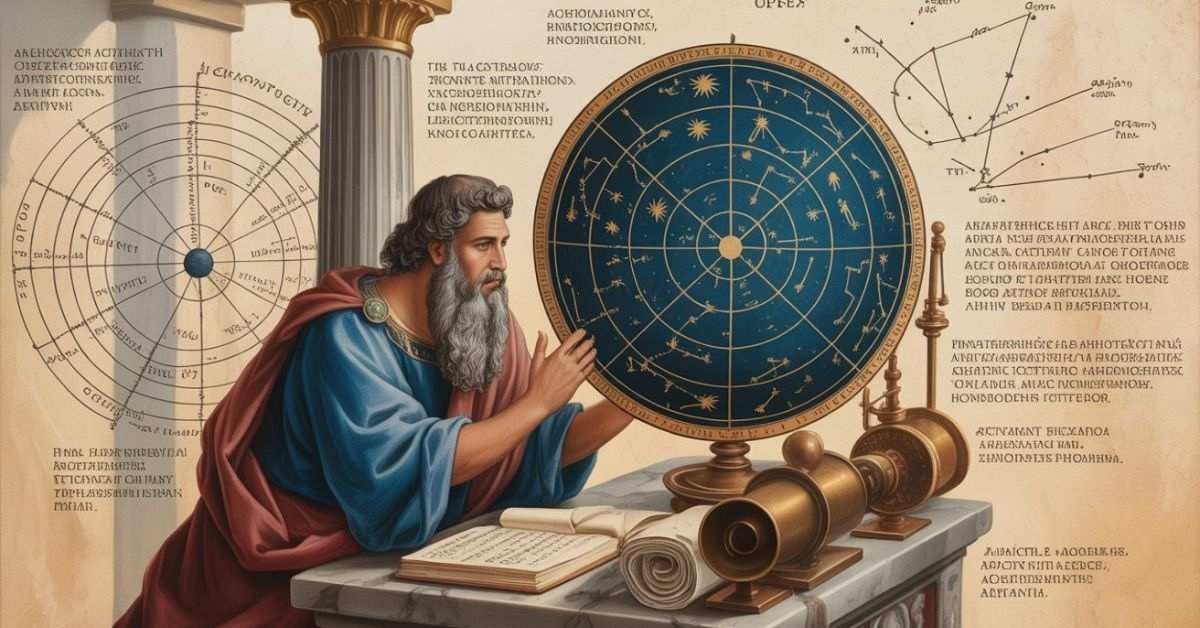
Astrology has fascinated humans for thousands of years, but its roots go far deeper than modern horoscopes. Hellenistic astrology, developed over two thousand years ago in the Mediterranean, combined philosophy, mathematics, and celestial observation to explore how the stars influence human life. This ancient system offers a structured, predictive approach that connects fate, personal growth, and cosmic order forming the foundation of much of modern astrology.
What Is Hellenistic Astrology and How Does It Work
Hellenistic astrology is an ancient system that originated over two thousand years ago in the Mediterranean region. It combines astronomy, philosophy, and spirituality to reveal how the positions of planets and stars influence human life. Unlike modern astrology, which often focuses on personality traits and self-expression, Hellenistic astrology emphasizes fate, life cycles, and cosmic order, offering a structured framework to understand destiny.
At its core, this practice interprets the rising sign, planetary placements, and aspects to provide insight into a person’s life path. It was developed by Greek scholars who merged Babylonian and Egyptian celestial observations with philosophical reasoning, creating a highly systematic approach to predicting life events. This makes Hellenistic astrology not just a tool for self-reflection but also a predictive science with a philosophical backbone.

Definition and Purpose of Hellenistic Astrology
Hellenistic astrology aims to map the influence of celestial bodies on human affairs, helping individuals understand the unfolding of life events and their place in the cosmic order. It was originally used to guide important life decisions and anticipate challenges.
- Provides insights into fate and life cycles
- Connects human experience with cosmic patterns
Differences from Modern Astrology
Hellenistic astrology differs from modern approaches by focusing on determinism and life events rather than personality traits. It analyzes planetary positions, aspects, and house placements to predict outcomes, providing a broader understanding of life’s rhythm and challenges.
Role of Fate, Philosophy, and Cosmic Patterns
This system emphasizes the philosophical connection between the cosmos and human destiny. By studying planetary cycles and aspects, astrologers interpreted how divine order influenced everyday life.
- Highlights the relationship between fate and human action
- Integrates philosophical reasoning with predictive techniques
Where Did Hellenistic Astrology Originate
Hellenistic astrology emerged during the Hellenistic period, roughly between the 2nd century BCE and the 6th century CE. This era followed Alexander the Great’s conquests, which created a cultural melting pot in regions like Egypt, Babylon, and Greece. The merging of different traditions led to a sophisticated system that combined mathematical precision with philosophical insight.
Greek scholars adapted Babylonian and Egyptian observations, formalizing them into a systematic astrological practice. The goal was not only to predict events but also to understand the universe’s order and how celestial movements mirrored human life. This fusion laid the groundwork for much of the astrology we know today.
Babylonian, Egyptian, and Greek Influences
The foundation of Hellenistic astrology came from multiple ancient cultures. Babylonian astrologers provided detailed planetary observations, Egyptians contributed decan-based timing methods, and Greek thinkers added philosophical reasoning.
- Combined astronomical knowledge with philosophical principles
- Created a structured system for predictive astrology
Development During the Hellenistic Period
During this era, astrology became highly technical and scholarly. Centers of learning, such as Alexandria, served as hubs for documenting and refining these techniques. Astrologers developed systematic methods for chart interpretation, including the use of houses, planetary aspects, and timing techniques, which allowed more accurate predictions.
Key Scholars and Thinkers
Astrologers like Ptolemy and Dorotheus of Sidon played crucial roles in formalizing astrology. Their works systematized planetary rulerships, houses, and aspects, influencing generations of astrologers. These scholars also emphasized linking philosophical principles with practical prediction methods, making astrology both a science and a guide for human life.
- Standardized planetary rulerships, houses, and aspects for accurate readings
- Integrated philosophical reasoning with practical predictive techniques
How the Horoscope Is Used in Hellenistic Astrology
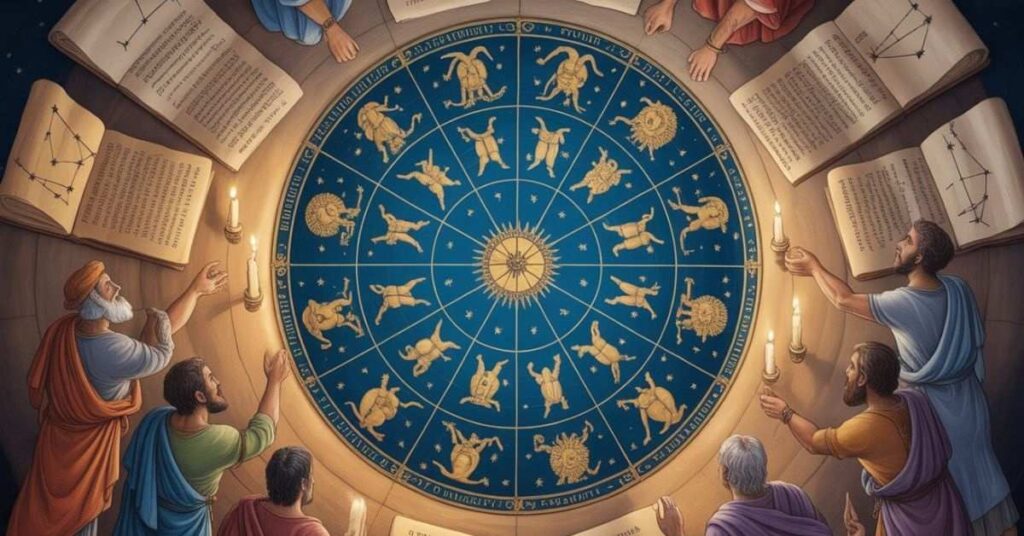
The horoscope in Hellenistic astrology is the primary tool for understanding how celestial bodies influence human life. It focuses on the rising sign (Ascendant), planetary positions, and their relationships within the twelve houses. This system allowed astrologers to interpret a person’s strengths, challenges, and life events with precision.
Astrologers used horoscopes not just for personality insights, but for predicting outcomes and guiding decisions. By analyzing the entire chart, including planetary aspects and house placements, Hellenistic astrology offered a comprehensive view of a person’s destiny within the cosmic order.
Understanding the Ascendant and Rising Sign
The Ascendant, or rising sign, marks the zodiac sign appearing on the eastern horizon at birth. It sets the framework for the entire chart, influencing personality, physical appearance, and how an individual interacts with the world.
The Twelve-House System Explained
Hellenistic astrologers divided the chart into twelve houses, each representing key life areas like career, relationships, health, and wealth. This structure allowed astrologers to analyze planetary positions and their effects across different aspects of life.
- Each house corresponds to specific life themes and experiences
- Planetary placements in houses determine challenges and opportunities
Planetary Positions and Aspects
Planets were seen as active forces influencing life events. Their positions, speed, and angular relationships (aspects) shaped how energies manifested, highlighting both favorable and challenging influences.
What Are the Historical Foundations of Hellenistic Astrology
Hellenistic astrology was built upon centuries of accumulated knowledge from Babylonian, Egyptian, and Greek traditions. Babylonian astronomers provided detailed planetary observations, Egyptians contributed decan-based timing methods, and Greek scholars added philosophical and mathematical frameworks. This cultural blending created a precise and sophisticated system for understanding human life through the stars.
Scholars in Alexandria, one of the ancient world’s greatest learning centers, refined these ideas and documented them in texts such as Ptolemy’s Tetrabiblos. These works provided the scientific and philosophical framework that allowed astrology to survive and evolve across generations, bridging culture, philosophy, and celestial observation.
Cultural Blending and Evolution
Hellenistic astrology emerged as a synthesis of multiple ancient traditions. Babylonian calculations, Egyptian decans, and Greek rational philosophy combined to create a structured and predictive astrological system that could explain both fate and human behavior.
Key Texts: Tetrabiblos and Other Manuscripts
Important texts like Ptolemy’s Tetrabiblos preserved the principles of Hellenistic astrology. These manuscripts detailed planetary rulerships, aspects, and house systems, providing a foundation for generations of astrologers.
- Served as the primary guide for predictive and horoscopic techniques
- Documented the philosophical and mathematical rules of astrology
Philosophical Approach and Rational Analysis
Hellenistic astrologers emphasized rationality and philosophical reasoning. Influenced by Stoicism, they viewed life events as part of a divine cosmic order, blending determinism with the possibility of personal virtue and conscious action. This approach allowed astrology to be both predictive and practical, guiding individuals to live wisely within the natural order of the cosmos. By combining mathematics, observation, and philosophy, Hellenistic astrology provided a structured framework for understanding fate and human behavior.
- Balanced determinism with personal choice and ethical living
- Integrated philosophy, mathematics, and celestial observation for accurate predictions
What Techniques Define Hellenistic Horoscopic Astrology
Hellenistic horoscopic astrology relied on precise techniques to interpret the influence of planets and stars on human life. These methods included calculating planetary positions, analyzing aspects, and using special points called Lots. The combination of these techniques allowed astrologers to make detailed predictions about life events, personality, and fate.
These techniques were highly systematic and required careful mathematical calculation. They offered a way to understand patterns in life, predict future events, and guide individuals in their decisions, blending science, philosophy, and spirituality into a single coherent system.
Use of Lots and the Lot of Fortune
Lots, or Parts, are mathematical points derived from planetary positions. The most famous, the Lot of Fortune, was used to identify areas of material success, health, and life outcomes.
- Highlighted key areas of life such as wealth and wellbeing
- Provided deeper layers of interpretation in horoscopic analysis
Planetary Conditions and Aspects
Planets were considered active forces in the chart, and their condition whether strong or weak affected how their energy manifested. Aspects, the angular relationships between planets, indicated harmony or tension in life events.
The Doctrine of Sect (Day and Night Charts)
Hellenistic astrologers divided charts into day and night births, known as the doctrine of sect. Certain planets performed better in one sect than the other, adding nuance and accuracy to predictions.
How Fate and Philosophy Shape Hellenistic Astrology
Hellenistic astrology is deeply rooted in philosophical reasoning and the concept of fate. Astrologers believed that the cosmos operates according to a divine order, and planetary movements reflect life’s unfolding patterns. This perspective allowed astrology to serve not just as a predictive tool, but also as a guide for ethical and conscious living.
By integrating philosophy with observation, Hellenistic astrologers emphasized that while destiny is influenced by the stars, individuals still have the ability to exercise personal virtue. This dual focus on fate and choice made astrology a tool for understanding both cosmic patterns and human behavior.
Stoicism and Determinism in Astrology
Influenced by Stoic philosophy, Hellenistic astrologers viewed life events as predetermined by the cosmos. They believed that understanding this order helps individuals live in harmony with universal laws.
Role of Personal Virtue and Choice
Despite determinism, astrology encouraged conscious decision-making. Personal virtue and ethical behavior were seen as ways to align with cosmic order and navigate life wisely.
- Encouraged moral action and conscious alignment with fate
- Balanced the influence of destiny with human responsibility
Integration of Science, Philosophy, and Spirituality
Hellenistic astrology combined precise astronomical calculations with philosophical insight and spiritual understanding, creating a holistic system for interpreting life’s events.
Why Hellenistic Astrology Declined and Survived
Hellenistic astrology experienced a gradual decline as the Roman Empire fell and Christianity spread across Europe. Astrology was often associated with pagan practices, leading to the loss or suppression of many ancient texts. Despite this, the knowledge of Hellenistic astrology survived through scholars in other regions who valued its predictive and philosophical depth.
The system persisted because it had a strong foundation in mathematics, observation, and philosophy. Scholars in the Islamic Golden Age preserved and expanded upon Greek texts, ensuring that Hellenistic techniques were passed down and eventually reintroduced during the European Renaissance.
Suppression During the Roman and Christian Era
Astrology’s association with pagan rituals led to its suppression in Europe, and many original works were lost or destroyed. Scholars had to study and practice astrology discreetly, often blending it with astronomy and philosophy to avoid persecution.
Preservation in the Islamic Golden Age
Arab scholars translated Greek astrological texts into Arabic, preserving essential techniques and philosophies. They also added commentaries, expanding predictive methods and refining interpretations.
- Preserved Hellenistic astrology across centuries
- Enhanced techniques and philosophical understanding for future generations
Revival During the European Renaissance
During the Renaissance, Greek and Arabic manuscripts were retranslated into Latin, allowing Hellenistic astrology to reenter Europe. Astrologers rediscovered planetary rulerships, houses, and timing techniques, reviving the study of fate, cosmic order, and philosophical interpretation in modern astrology.
How Hellenistic Astrology Is Practiced Today
Hellenistic astrology has experienced a modern revival as contemporary astrologers rediscover ancient texts and techniques. Practitioners today study original manuscripts, reconstruct predictive methods, and combine them with modern approaches, making the system both historically accurate and practically relevant.
Modern astrology often blends psychological insights with Hellenistic techniques, offering a balanced approach that considers fate, personal choice, and cosmic patterns. This allows astrologers to provide guidance that is both deeply philosophical and accessible for contemporary seekers.
Modern Revival by Astrologers
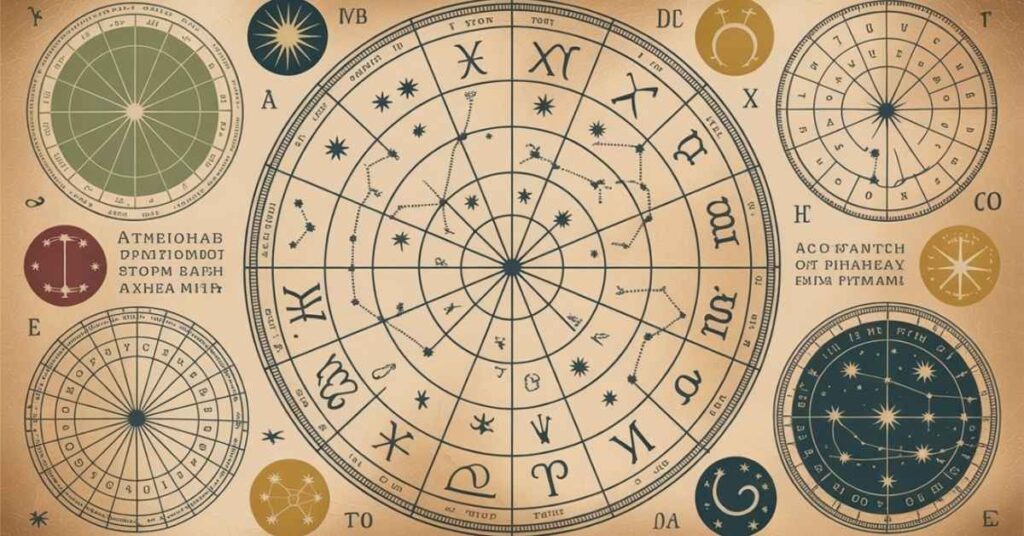
Practitioners such as Chris Brennan and Demetra George have popularized Hellenistic methods, emphasizing accuracy, predictive potential, and philosophical depth. They reintroduce traditional techniques for horoscopes, planetary aspects, and timing methods.
Combining Ancient and Psychological Techniques
Modern astrologers integrate Hellenistic principles with contemporary astrology, including psychological interpretation and personality insights. This combination allows for nuanced readings that honor ancient precision while remaining relevant to modern life.
- Balances predictive techniques with psychological understanding
- Makes Hellenistic astrology accessible and practical today
Accuracy, Predictive Methods, and Philosophical Insights
Ancient techniques like zodiacal releasing, annual profections, and Lots are applied alongside modern analysis. These methods help identify life cycles, opportunities, and challenges while maintaining the philosophical perspective of cosmic order and personal growth.
How Hellenistic Astrology Guides Career and Life Direction
Hellenistic astrology provides valuable insights into career paths, professional development, and life purpose. By analyzing the 10th house, Midheaven, and planetary placements, astrologers can reveal strengths, potential challenges, and opportunities for growth. This approach offers structured guidance for navigating life and achieving fulfillment.
Timing techniques, such as annual profections and zodiacal releasing, allow astrologers to identify periods when career advancement, recognition, or transitions are most likely. Combining these methods with planetary rulerships and Lots creates a comprehensive understanding of professional and personal direction.
10th House, Midheaven, and Professional Path
The 10th house represents career, reputation, and authority, while the Midheaven marks the highest point in the chart. Planets located in this house or ruling it indicate the individual’s professional strengths, challenges, and potential for success.
Role of the Lot of Spirit and Benefic Planets
The Lot of Spirit highlights motivation, purpose, and recognition. When aligned with benefic planets such as Jupiter or Venus, it can indicate professional success, fulfillment, and influential opportunities.
- Reveals periods of career growth and recognition
- Indicates alignment of personal purpose with professional success
Timing Techniques: Annual Profections and Zodiacal Releasing
Hellenistic timing methods track cycles in life, highlighting when certain themes, including career advancement or personal growth, become active. These techniques help individuals plan and make informed decisions in alignment with cosmic rhythms.
How Health and Crisis Are Interpreted in Astrology
Hellenistic astrology examines health and life challenges through planetary positions and house analysis. The 1st house reflects physical vitality, while the 6th house highlights illness, daily routines, and potential vulnerabilities. By studying these areas, astrologers can provide guidance for maintaining well-being and navigating health challenges.
Astrology also addresses personal growth and crisis management. Difficult planetary aspects or transits are viewed as opportunities for self-awareness and transformation rather than mere misfortune, helping individuals respond consciously to life’s challenges.
Houses, Planetary Positions, and Vitality
The 1st house governs physical health and general vitality, while the 6th house focuses on illness and daily life challenges. The condition of the Sun, Moon, and ruling planets further refines an individual’s health analysis.
Navigating Personal Growth Through Astrology
Astrological charts provide insights into personality patterns and potential areas for development. By understanding these influences, individuals can make conscious choices to improve self-awareness, habits, and overall well-being.
- Helps align actions with personal growth and cosmic cycles
- Offers guidance for health, habits, and long-term vitality
Handling Challenges and Transformational Periods
Challenging aspects or transits are interpreted as moments for inner growth. Hellenistic astrology encourages resilience, self-reflection, and strategic planning to navigate crises effectively while remaining aligned with life’s broader cosmic order.
Conclusion
Hellenistic astrology bridges philosophy, mathematics, and spirituality, offering timeless insights into fate, life cycles, and personal growth. By studying ancient techniques alongside modern approaches, we gain a deeper understanding of ourselves and the cosmic patterns that shape our lives. Revisiting these methods provides not only historical knowledge but practical guidance for navigating life with awareness and purpose.