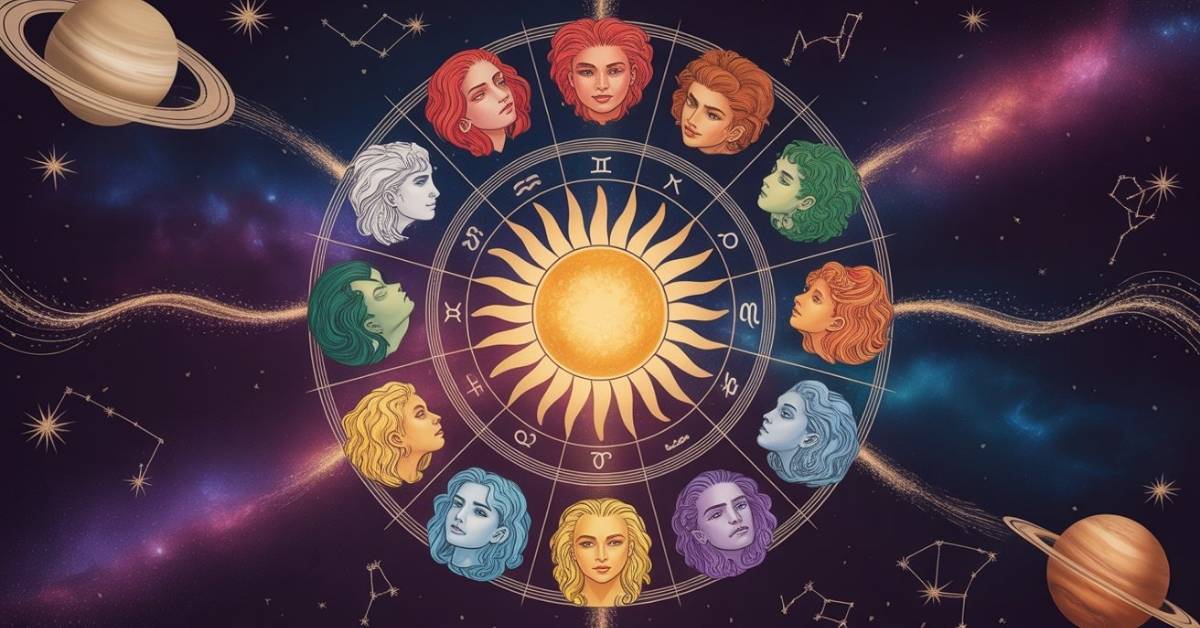

Astrology has captivated human imagination for thousands of years, offering a unique lens through which to understand personality, relationships, and life patterns. By studying the positions of celestial bodies, astrology provides insight into individual traits, motivations, and natural tendencies. Whether you are a curious beginner or someone who frequently consults horoscopes, exploring zodiac signs can bring clarity, self-awareness, and guidance in everyday life.
The study of astrology is more than reading horoscopes; it is a symbolic language connecting the cosmos to human experience. Through zodiac signs, planetary influences, and elemental energies, astrology reveals patterns in behavior, decision-making, and emotional responses. Understanding these patterns allows you to navigate challenges more effectively and strengthen connections with others.
What Are Zodiac Signs in Astrology?
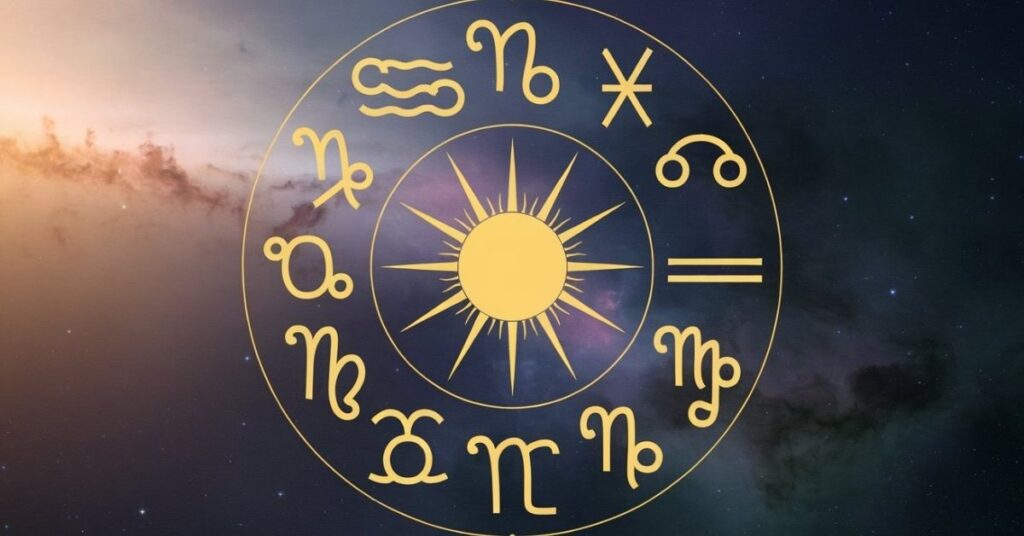
In Western astrology, zodiac signs represent twelve equal sections of the ecliptic, the Sun’s apparent yearly path across the sky. Each sign covers 30 degrees and carries unique symbols, elemental associations, and traditional planetary rulers. Astrologers use these twelve signs to interpret personality themes, emotional tendencies, relationships, and different approaches to life.
The zodiac has roots in ancient Mesopotamia, particularly Babylon, where astronomers developed important foundations of the twelve-sign system. Greek and other Mediterranean traditions later expanded these ideas and contributed to the development of Western astrology.
Today, astrology offers a symbolic framework for exploring personal characteristics and reflecting on life experiences. However, scientific research has not established that zodiac signs determine personality, behaviour, or future events.
The Twelve Zodiac Signs and Their Meanings
Western astrology divides the zodiac into twelve signs, from Aries to Pisces. Each sign belongs to one of four elements—Fire, Earth, Air, or Water—and one of three modalities: Cardinal, Fixed, or Mutable. These classifications help astrologers distinguish the symbolic qualities of each sign.
The twelve zodiac signs follow this traditional order:
- Aries: Courage, initiative, and determination.
- Taurus: Stability, patience, and persistence.
- Gemini: Curiosity, adaptability, and communication.
- Cancer: Compassion, sensitivity, and emotional awareness.
- Leo: Confidence, creativity, and self-expression.
- Virgo: Analytical thinking, organisation, and practicality.
- Libra: Fairness, diplomacy, and cooperation.
- Scorpio: Intensity, resilience, and transformation.
- Sagittarius: Adventure, optimism, and exploration.
- Capricorn: Responsibility, ambition, and discipline.
- Aquarius: Independence, innovation, and intellectual curiosity.
- Pisces: Imagination, empathy, and intuition.
These descriptions reflect traditional astrological associations rather than fixed personality characteristics. A complete birth chart also considers planetary placements, houses, and aspects beyond the Sun sign.
Why Are Zodiac Signs Important in Astrology?
Zodiac signs provide the foundation for interpreting a birth chart. Astrologers examine their positions alongside planets and houses to explore symbolic themes related to identity, communication, relationships, and personal development.
For example, the Sun sign traditionally represents conscious identity, while the Moon sign reflects emotional themes. The Ascendant, or Rising Sign, represents self-presentation and the way a person approaches new experiences.
Understanding these distinctions helps readers explore astrology beyond general daily horoscopes. It also provides useful context for learning about planetary influences and birth chart interpretation.
The Four Astrology Elements and Their Influence
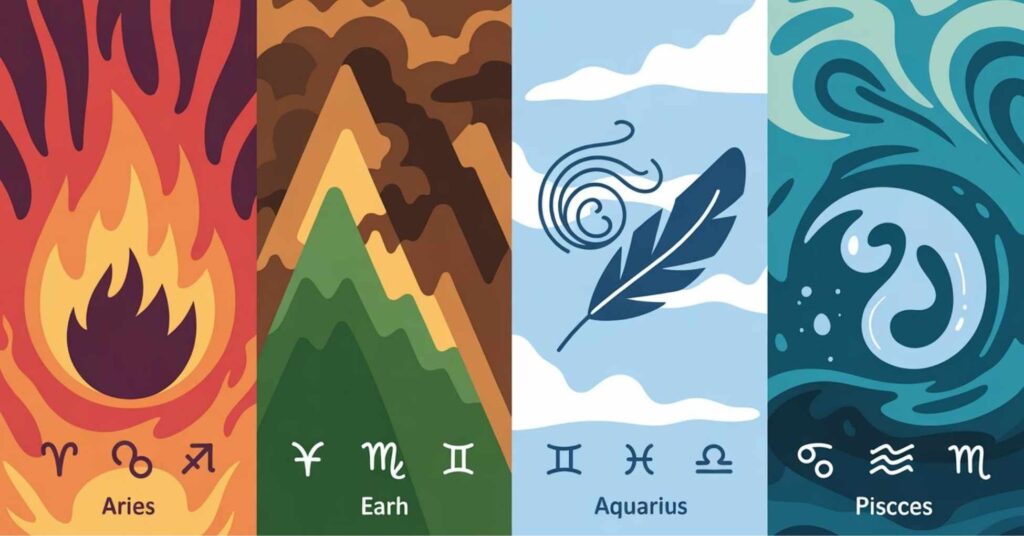
The four classical elements—Fire, Earth, Air, and Water—form an essential part of Western astrology. Each element includes three zodiac signs and represents a different collection of symbolic qualities.
Astrologers use these elements to describe how signs traditionally express motivation, approach challenges, communicate, and relate to others. For example, Fire represents enthusiasm and initiative, while Earth emphasises practicality and stability.
zodiac symbolism. However, sharing an element does not mean two signs have identical characteristics. Their planetary rulers and modalities introduce additional distinctions.
Fire Signs (Aries, Leo, Sagittarius)
Fire signs are passionate, energetic, and action-oriented. They thrive on excitement, creativity, and bold initiatives, often inspiring others with their enthusiasm. Their challenge lies in balancing impulsiveness with patience to avoid emotional burnout.
- Bold, motivated, and naturally expressive
- Can struggle with impatience or impulsive decisions
Earth Signs (Taurus, Virgo, Capricorn)
Earth signs are reliable, down-to-earth, and naturally oriented toward building stability and long-term security. They value discipline, reliability, and long-term success. While they excel at creating structure, they may resist change or become overly cautious in uncertain situations.
- Grounded, dependable, and goal-oriented
- May appear rigid or resistant to new experiences
Air Signs (Gemini, Libra, Aquarius)
Air signs are intellectual, social, and communicative. They thrive on ideas, discussion, and mental stimulation, often excelling in problem-solving and collaboration. Their challenge is staying emotionally connected instead of overthinking situations.
- Analytical, curious, and socially adaptable
- Can seem emotionally distant or inconsistent
Water Signs (Cancer, Scorpio, Pisces)
Water signs are emotional, intuitive, and deeply empathetic. They feel experiences profoundly and often sense others’ emotions instinctively. Their growth involves maintaining boundaries to prevent emotional overwhelm.
- Sensitive, compassionate, and perceptive
- Prone to emotional overload without balance
Zodiac Signs Meanings and Personality Traits
Each of the twelve zodiac signs carries distinct symbols, planetary associations, and traditional personality characteristics. In Western astrology, these qualities help explain how astrologers interpret different approaches to communication, relationships, personal ambitions, and everyday experiences.
Understanding zodiac signs and personality traits can offer an interesting starting point for self-reflection. However, astrology does not scientifically determine someone’s character or behaviour. Family, environment, personal experiences, and individual choices all contribute to personality development.
Below, explore the traditional meanings, strengths, and challenges of all twelve zodiac signs.
Aries (March 21 – April 19)
Aries represents courage, initiative, and a strong desire to take action. Mars, its ruling planet, symbolises ambition, determination, and competitive energy. In astrology, Aries often represents individuals who enjoy challenges, embrace new opportunities, and prefer taking the lead rather than following established routines.
However, the enthusiasm associated with Aries can sometimes lead to impatience. Learning to consider different perspectives before acting can help balance this sign’s energetic nature.
- Strengths: Courage, confidence, determination, and leadership.
- Challenges: Impatience, impulsive decisions, and frustration with delays.
Taurus (April 20 – May 20)
Taurus symbolises stability, patience, and appreciation for life’s practical comforts. Venus rules this earth sign and represents beauty, personal values, and harmony. Traditional astrology connects Taurus with persistence, loyalty, and a preference for building lasting foundations.
Although Taurus values consistency, this attachment to familiar routines can make unexpected changes uncomfortable. A flexible mindset can help balance the desire for security with opportunities for growth.
- Strengths: Reliability, patience, loyalty, and persistence.
- Challenges: Stubbornness, resistance to change, and attachment to comfort.
Gemini (May 21 – June 20)
Gemini represents curiosity, communication, and intellectual exploration. Mercury rules this mutable air sign, connecting it with language, learning, and exchanging ideas. Gemini traditionally symbolises adaptability and an interest in discovering different perspectives.
This curiosity encourages exploration, but it can also make maintaining focus challenging. Developing consistent priorities may help people who identify with Gemini characteristics make better use of their interests.
- Strengths: Communication, adaptability, curiosity, and versatility.
- Challenges: Indecisiveness, restlessness, and difficulty maintaining focus.
Cancer (June 21 – July 22)
Cancer symbolises emotional awareness, compassion, and a strong connection with home and family. The Moon rules Cancer in traditional astrology and represents emotional needs, memory, and security.
Astrologers associate this water sign with nurturing behaviour and a protective approach to relationships. However, strong emotional attachments may sometimes create sensitivity to criticism or unexpected changes.
- Strengths: Compassion, loyalty, emotional awareness, and protectiveness.
- Challenges: Oversensitivity, withdrawal during conflict, and difficulty letting go.
Leo (July 23 – August 22)
Leo represents confidence, creativity, and personal expression. The Sun rules this fixed fire sign and symbolises identity, vitality, and the desire to make a meaningful contribution.
In traditional astrology, Leo embodies enthusiasm, generosity, and the courage to express individual talents. Its creative nature encourages leadership and artistic exploration. However, an excessive desire for recognition can sometimes create disappointment when others fail to acknowledge its efforts.
- Strengths: Confidence, generosity, creativity, and enthusiasm.
- Challenges: Pride, sensitivity to criticism, and a strong need for appreciation.
Virgo (August 23 – September 22)
Virgo symbolises practical intelligence, careful observation, and continuous improvement. Mercury rules this mutable earth sign, linking it with analytical thinking, organisation, and effective communication.
Traditional astrology associates Virgo with people who enjoy solving problems, examining details, and helping others through useful actions. While these qualities encourage precision, excessive self-criticism can make it difficult to accept imperfections.
- Strengths: Analytical thinking, reliability, organisation, and problem-solving.
- Challenges: Overthinking, perfectionism, and excessive self-criticism.
Libra (September 23 – October 22)
Libra represents fairness, cooperation, and the search for harmony. Venus rules this cardinal air sign and symbolises beauty, relationships, and shared values.
In astrology, Libra reflects a thoughtful approach to partnerships and social interactions. Its symbolic qualities include diplomacy and the ability to consider different opinions. However, constantly seeking balance can sometimes make decision-making more complicated.
- Strengths: Diplomacy, fairness, cooperation, and social awareness.
- Challenges: Indecisiveness, conflict avoidance, and people-pleasing.
Scorpio (October 23 – November 21)
Scorpio symbolises emotional intensity, determination, and transformation. Traditional astrology associates Scorpio with Mars, while modern Western astrology also connects it with Pluto.
As a fixed water sign, Scorpio represents persistence, emotional depth, and a strong interest in understanding situations beneath the surface. Its determined nature encourages commitment, although excessive caution may sometimes make trust difficult.
- Strengths: Resilience, determination, loyalty, and emotional insight.
- Challenges: Suspicion, secrecy, and difficulty releasing past conflicts.
Sagittarius (November 22 – December 21)
Sagittarius represents exploration, optimism, and the pursuit of knowledge. Jupiter rules this mutable fire sign and symbolises expansion, wisdom, and philosophical interests.
Traditional astrology connects Sagittarius with curiosity about different cultures, beliefs, and experiences. Its adventurous symbolism encourages learning and personal freedom. However, excessive enthusiasm may sometimes lead to unrealistic expectations or impatience with routine responsibilities.
- Strengths: Optimism, honesty, curiosity, and open-mindedness.
- Challenges: Impatience, blunt communication, and inconsistent follow-through.
Capricorn (December 22 – January 19)
Capricorn symbolises responsibility, discipline, and long-term achievement. Saturn rules this cardinal earth sign and represents structure, accountability, and perseverance.
In astrology, Capricorn reflects a practical approach to goals and a willingness to work patiently towards meaningful accomplishments. Its focus on responsibility can support careful planning, although excessive attention to achievement may leave little room for rest and emotional expression.
- Strengths: Discipline, patience, responsibility, and strategic thinking.
- Challenges: Excessive seriousness, work-focused habits, and difficulty relaxing.
Aquarius (January 20 – February 18)
Aquarius represents intellectual independence, innovation, and commitment to ideas. Saturn serves as its traditional ruling planet, while Uranus holds an important role in modern Western astrology.
As a fixed air sign, Aquarius symbolises original thinking and a willingness to question established perspectives. Traditional interpretations also connect this sign with social awareness and collective progress. However, a strong commitment to personal beliefs may sometimes create stubbornness.
- Strengths: Originality, independence, intellectual curiosity, and determination.
- Challenges: Stubbornness, emotional distance, and resistance to opposing viewpoints.
Pisces (February 19 – March 20)
Pisces symbolises imagination, compassion, and emotional sensitivity. Jupiter rules Pisces in traditional astrology, while modern Western astrology also associates the sign with Neptune.
As a mutable water sign, Pisces represents creativity, reflection, and an interest in deeper emotional or spiritual themes. Its adaptable nature encourages understanding and artistic expression. However, idealistic expectations may sometimes make practical decisions more challenging.
- Strengths: Creativity, compassion, adaptability, and imagination.
- Challenges: Escapism, unrealistic expectations, and difficulty establishing boundaries.
Zodiac Love Compatibility: How Do Zodiac Signs Match?
Zodiac love compatibility explores how different astrological signs may interact in romantic relationships. Traditional Western astrology examines elements, planetary rulers, and birth chart placements to interpret symbolic areas of harmony and potential disagreement between partners.
For example, astrologers often consider fire and air signs compatible because their traditional qualities complement one another. Fire represents enthusiasm and initiative, while air symbolises communication and intellectual curiosity. Similarly, earth and water signs frequently appear together in compatibility interpretations because they represent stability and emotional understanding.
However, zodiac compatibility cannot reliably predict whether a relationship will succeed. Communication, trust, emotional maturity, and shared values play a much greater role in building healthy, lasting connections.
Astrology can offer an entertaining framework for discussing relationship preferences, but couples should evaluate their compatibility through real experiences and mutual understanding rather than relying exclusively on their Sun signs.respect, and effort. Astrology highlights potential strengths and challenges, allowing partners to navigate differences and deepen their connection.
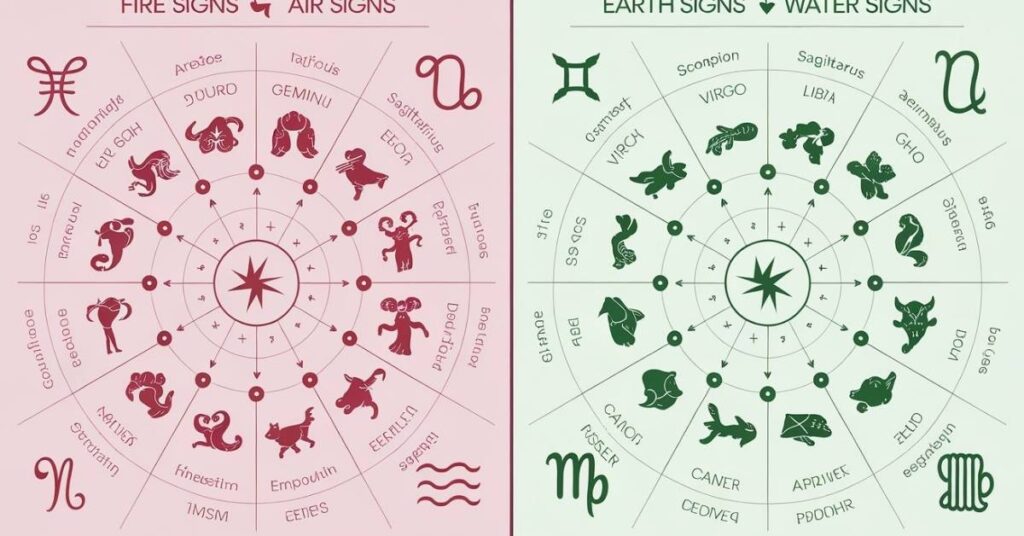
Best Zodiac Love Matches
In traditional Western astrology, certain zodiac signs share complementary qualities that may support understanding and harmony in romantic relationships. Astrologers often compare the four elements—Fire, Earth, Air, and Water—to explore how different signs approach affection, communication, and emotional connection.
Fire and Air Signs: Aries, Leo, and Sagittarius often form favourable astrological pairings with Gemini, Libra, and Aquarius. Fire represents enthusiasm, confidence, and adventure, while Air symbolises communication, curiosity, and intellectual connection. These combinations traditionally suggest relationships that encourage creativity, new experiences, and shared interests.
Earth and Water Signs: Taurus, Virgo, and Capricorn commonly complement Cancer, Scorpio, and Pisces in astrological compatibility readings. Earth represents stability, patience, and practical support, while Water symbolises emotional sensitivity, compassion, and intuition. Together, these elements suggest a balance between emotional understanding and everyday reliability.
However, shared or complementary elements do not guarantee relationship success. Individual personalities, mutual respect, and effective communication matter more than astrological classifications.
Challenging Zodiac Pairings
Traditional astrology also identifies combinations that may represent contrasting approaches to relationships. Some zodiac signs have different elemental qualities or communication preferences, which astrologers interpret as potential areas of tension rather than unavoidable incompatibility.
For example, Fire signs traditionally value spontaneity and direct action, while Water signs emphasise emotional sensitivity and reflection. Similarly, Earth signs often symbolise consistency and careful planning, whereas Air signs represent flexibility, intellectual exploration, and changing perspectives.
These differences can create opportunities for better understanding when partners recognise and respect each other’s needs.
- Different communication styles: Partners may express emotions, opinions, and expectations in contrasting ways.
- Conflicting priorities: One person may value stability while the other prefers variety or independence.
- Opportunities for growth: Patience, honest conversations, and compromise can help couples navigate disagreements.
No zodiac pairing automatically determines whether a relationship will succeed or fail. Healthy relationships depend on shared effort, emotional maturity, trust, and mutual understanding.
Astrology Systems Around the World
Astrology has developed through several cultural traditions, each with its own methods, symbols, and interpretations of celestial patterns. While Western astrology commonly focuses on the twelve zodiac signs and planetary placements, other traditions explore different calendars, astronomical frameworks, and symbolic systems.
Chinese astrology, for example, connects a twelve-animal cycle with traditional Chinese calendrical concepts, while Vedic astrology, also known as Jyotisha, uses a sidereal zodiac in many of its calculations and places significant emphasis on planetary positions, lunar mansions, and timing systems. Mesoamerican calendar traditions also developed distinctive ways of connecting time, ritual, and cosmological beliefs.
These systems differ in their historical origins, calculations, and cultural purposes. Exploring them helps readers understand astrology’s historical diversity without assuming that every tradition follows the same rules or offers scientifically established predictions about human behaviour.
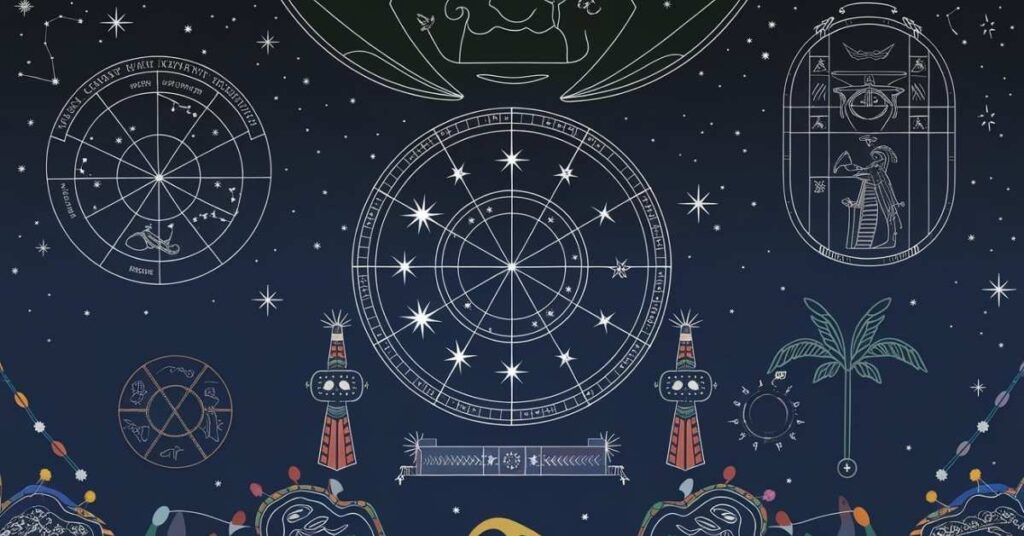
Chinese Astrology and Zodiac Animals
Chinese astrology draws on traditional Chinese calendars, a twelve-animal zodiac cycle, and the principles of yin and yang. Each zodiac animal represents a particular year within the repeating cycle and carries symbolic associations with personality, relationships, and life experiences.
Unlike Western astrology, which commonly identifies zodiac signs through the Sun’s position, the Chinese zodiac primarily uses a person’s birth year to assign an animal sign. However, more detailed Chinese astrological systems, such as BaZi, also consider the year, month, day, and hour of birth.
The twelve Chinese zodiac animals follow this order:
- Rat, Ox, Tiger, Rabbit, Dragon, Snake, Horse, Goat, Monkey, Rooster, Dog, and Pig.
- Five Elements: Wood, Fire, Earth, Metal, and Water combine with the zodiac cycle to create a repeating 60-year system.
These traditional classifications help explain how Chinese astrology interprets personality symbolism and compatibility. They reflect cultural beliefs rather than scientifically established influences on human behaviour.
Vedic Astrology and Birth Charts
Vedic astrology, also known as Jyotisha, developed within ancient Indian traditions and remains an important part of Hindu cultural and astrological practices. Many Vedic astrologers use a sidereal zodiac, which differs from the tropical zodiac commonly used in Western astrology.
Vedic birth chart interpretation examines planetary positions, the Ascendant (Lagna), the Moon sign, and nakshatras, or lunar mansions. Astrologers combine these elements to explore traditional themes surrounding relationships, professional interests, personal responsibilities, and spiritual development.
Two important features distinguish Vedic astrology:
- Birth Chart Interpretation: Astrologers examine planets, houses, lunar positions, and planetary relationships to develop individual readings.
- Dasha Systems: These planetary-period systems help astrologers organise traditional interpretations of different life stages and events.
Vedic astrology also places importance on karma and dharma within certain interpretive traditions. Although practitioners use these concepts for spiritual reflection, scientific evidence does not establish astrology as a reliable method of predicting personal outcomes.
Mayan Astrology and Cosmic Cycles
Ancient Maya civilisation developed sophisticated calendar systems that connected astronomical observations, ceremonial traditions, and concepts of sacred time. Modern discussions sometimes describe these traditions as Mayan astrology, although they differ considerably from Western zodiac-based astrology.
The Tzolk’in, a 260-day sacred calendar, combines 20 named days with a repeating cycle of 13 numbers. Together, these elements create 260 unique combinations that carry traditional ceremonial and symbolic significance.
Two important aspects of Maya calendrical traditions include:
- Tzolk’in Calendar: Combines 20 day names with 13 numbers to organise a repeating 260-day cycle.
- Cultural and Spiritual Significance: Connects particular days with ceremonial observances, historical traditions, and symbolic interpretations.
The Maya also developed advanced astronomical knowledge and used several interconnected calendars. Understanding these traditions requires recognising their historical and cultural importance rather than treating them as interchangeable with modern Western horoscopes.
Why Do People Believe in Astrology?
People turn to astrology for many reasons, including cultural traditions, personal curiosity, emotional reassurance, and the desire to understand life’s uncertainties. Zodiac descriptions and horoscope interpretations often encourage readers to reflect on their experiences, relationships, and personal goals.
Psychological factors can also influence belief in astrology. For example, the Barnum effect, sometimes called the Forer effect, describes how people may interpret broad personality statements as highly specific to themselves. Confirmation bias can strengthen this impression when individuals remember accurate-seeming predictions but overlook interpretations that do not match their experiences.
Although scientific research has not established astrology’s predictive accuracy, its symbolic language and historical significance continue to attract people across different cultures.
Psychological Comfort and Guidance
Astrology can offer some readers a familiar framework for reflecting on emotions, uncertainties, and personal decisions. Reading a horoscope may encourage someone to consider their priorities, examine recent experiences, or think about possible changes in their life.
However, personal reflection differs from reliable prediction. Astrology cannot establish future outcomes or replace professional advice when someone faces important medical, financial, or psychological concerns.
Readers may use astrological interpretations to explore:
- Personal Reflection: Consider emotions, habits, and individual priorities.
- Meaning and Identity: Explore symbolic ideas that connect with personal experiences.
- Uncertainty: Reflect on challenges without assuming that planetary positions determine the results.
This approach allows readers to appreciate astrology’s cultural and personal significance while maintaining realistic expectations.
Cultural and Historical Influence
Astrology has influenced cultural practices, literature, religious traditions, and historical approaches to understanding the heavens. Civilisations in Mesopotamia, India, China, and the Mediterranean developed different relationships between celestial observations and symbolic interpretations.
In some historical societies, rulers consulted astrologers about political or ceremonial matters, while scholars studied planetary movements alongside mathematical astronomy. These activities contributed to a long history of interaction between celestial observation and cultural belief.
Astrology’s historical importance appears in several areas:
- Cultural Traditions: Astrological symbols influenced calendars, ceremonies, and traditional beliefs.
- Art and Literature: Zodiac imagery appeared in manuscripts, architecture, paintings, and storytelling.
These historical connections explain astrology’s lasting cultural presence without demonstrating that its predictions accurately describe future events.
Interesting Facts About Astrology You Should Know
Astrology extends far beyond newspaper horoscopes and daily zodiac predictions. Its history includes ancient astronomical observations, cultural symbolism, philosophical ideas, and different approaches to interpreting celestial movements.
Exploring these connections helps readers understand how astrology developed across civilisations and why its symbols remain familiar today. Although modern astronomy and astrology follow different methods, their histories share important early connections.
Ancient Origins and Influence
Early forms of celestial divination emerged in ancient Mesopotamia, where scholars observed the sky and connected astronomical events with traditional interpretations. Babylonian astronomers later contributed to the development of the twelve-sign zodiac, which influenced subsequent Greek astrological systems.
Over time, different cultures adapted astrological ideas according to their own religious, philosophical, and mathematical traditions. Indian, Greek, and other scholars developed distinct methods of interpreting planetary positions and celestial cycles.
Important historical connections include:
- Astronomical Observation: Ancient scholars recorded planetary movements, eclipses, and recurring celestial patterns.
- Calendars and Cultural Practices: Celestial observations contributed to timekeeping, agricultural calendars, and ceremonial traditions.
These developments highlight the historical relationship between astronomy and astrology, even though modern science distinguishes astronomical measurements from astrological interpretations.
Symbolism and Planetary Connections
Astrology uses planets, zodiac signs, elements, modalities, and geometric relationships to build a symbolic interpretation of a birth chart. Each component plays a different role within traditional astrological systems.
For example, Western astrologers associate Mercury with communication, Venus with relationships and values, Mars with initiative, and Saturn with responsibility. These associations form part of astrology’s interpretive framework rather than measurable planetary effects on personality.
Two essential components include:
- Planetary Symbolism: Planets represent traditional themes such as communication, ambition, relationships, and personal development.
- Zodiac Structure: Signs, elements, modalities, and planetary aspects provide additional context for chart interpretations.
Understanding these symbolic relationships helps readers follow astrological explanations more clearly while recognising the difference between traditional beliefs and scientific evidence.
Related Astrology Stories and Guides
Readers who want to explore astrology beyond basic zodiac descriptions can examine specialised guides about birth charts, planetary placements, relationship compatibility, and the historical development of astrological traditions.
A well-organised collection of related articles makes it easier to move from introductory concepts towards more detailed topics. Beginners may start with zodiac sign characteristics, while experienced readers may prefer exploring planetary aspects, houses, and different chart interpretation methods.thusiast, these guides offer a roadmap for better decision-making, self-reflection, and personal development. They also serve as a hub for discovering new ways to interpret charts, understand life patterns, and explore the mysteries of the cosmos.
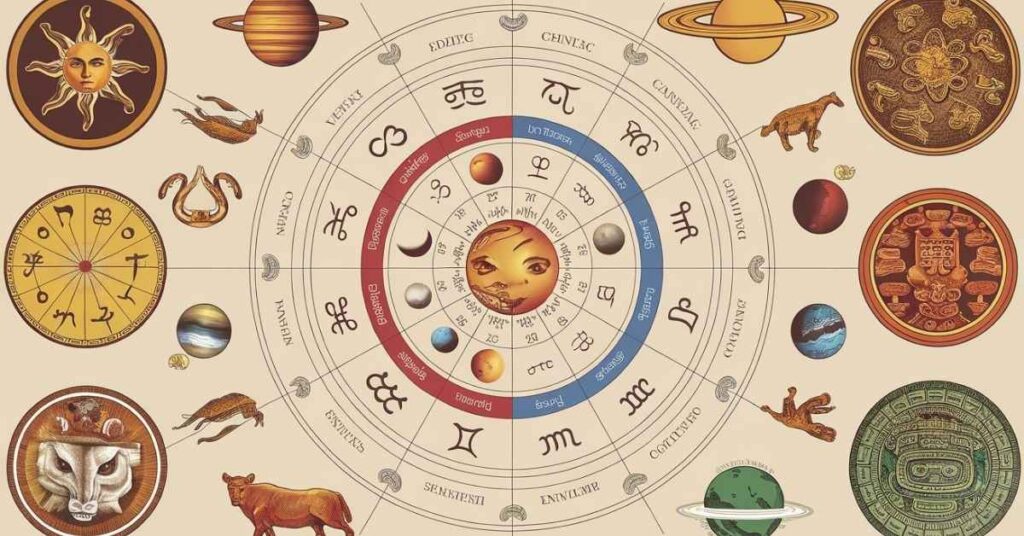
Zodiac Sign Deep Dives
Explore individual zodiac signs to understand their traditional personality traits, strengths, challenges, and symbolic meanings. Each guide explains how planetary rulers, elements, and modalities contribute to different astrological interpretations.
Whether you want to learn about Aries’ leadership symbolism, Virgo’s analytical qualities, or Pisces’ imaginative nature, these detailed guides offer a closer look at each sign.
- Personality and Characteristics: Explore traditional strengths, weaknesses, emotional tendencies, and communication styles.
- Personal Development: Discover practical reflection topics inspired by each zodiac sign’s symbolic qualities.
Compatibility and Relationship Guides
Zodiac compatibility guides explore how traditional astrology interprets relationships between different signs. These resources compare elemental qualities, communication styles, and symbolic connections to explain why astrologers consider certain combinations harmonious or challenging.
Readers can explore romantic compatibility, friendships, and family relationships while learning why real-world factors such as communication, trust, and mutual respect matter more than astrological pairings.
- Compatibility Comparisons: Understand traditional zodiac matches and potential differences between signs.
- Relationship Insights: Explore communication, emotional understanding, and constructive ways to approach disagreements.
Planetary Influence and Birth Charts
A birth chart maps the positions of the Sun, Moon, planets, and important astrological points at a particular date, time, and location. Astrologers examine these placements alongside zodiac signs, houses, and planetary aspects to develop symbolic interpretations.
Birth chart guides help readers understand concepts such as the Ascendant, Midheaven, planetary rulerships, and the twelve astrological houses. These topics provide a deeper introduction to astrology beyond basic Sun sign descriptions.
- Planetary Placements: Learn how astrologers interpret the Sun, Moon, Mercury, Venus, Mars, and other celestial bodies.
- Birth Chart Basics: Explore houses, aspects, and chart angles to understand traditional astrological methods.
Frequently Asked Questions About Zodiac Signs
What is my zodiac sign by date?
Your zodiac sign usually refers to your Sun sign, which depends on the Sun’s position at your birth. Western tropical astrology commonly uses twelve date ranges, although exact transition dates can vary slightly.
Do zodiac signs affect personality?
Astrology associates zodiac signs with particular personality traits, but scientific research has not established that birth signs determine individual behaviour or character.
Are zodiac signs scientifically proven?
No. Astrology uses traditional symbols and interpretations, but scientific evidence does not support zodiac signs as reliable predictors of personality or life events.
Which zodiac sign is most compatible with mine?
Traditional astrology often pairs Fire with Air and Earth with Water. However, healthy relationships depend more on communication, trust, shared values, and mutual respect.
Can zodiac signs predict the future?
No scientific evidence shows that zodiac signs can reliably predict future events. Astrology offers symbolic interpretations rather than dependable forecasts.
Do Moon signs matter in astrology?
Yes. In traditional astrology, the Moon sign represents emotional needs, instinctive responses, and inner experiences. It does not scientifically determine someone’s emotional personality.
How can I use astrology in daily life?
You can explore astrology as a tool for personal reflection, journaling, and learning about cultural traditions. Base important decisions on practical information and reliable evidence.
