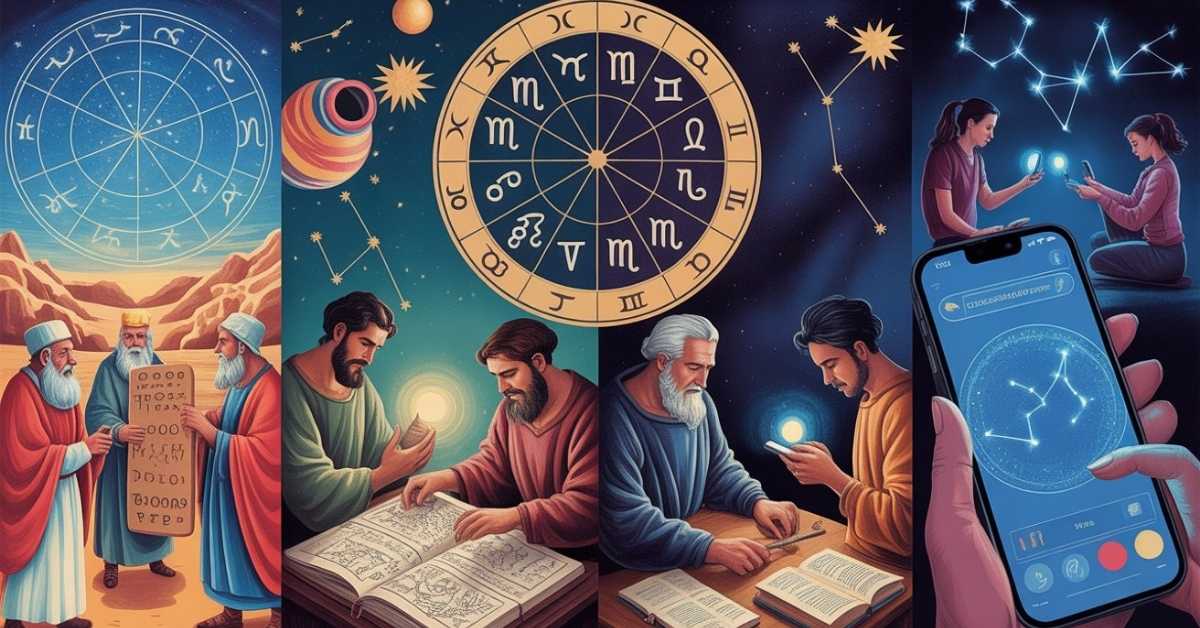
Ever wonder who first turned the stars into a life guide? Astrology began as an ancient attempt to read time and fate in the sky, and it grew through religion, medicine, and philosophy before finding new life in modern horoscopes. This guide uncovers the roots of zodiac signs and shows how those old ideas still speak to you today.
How the Zodiac Began
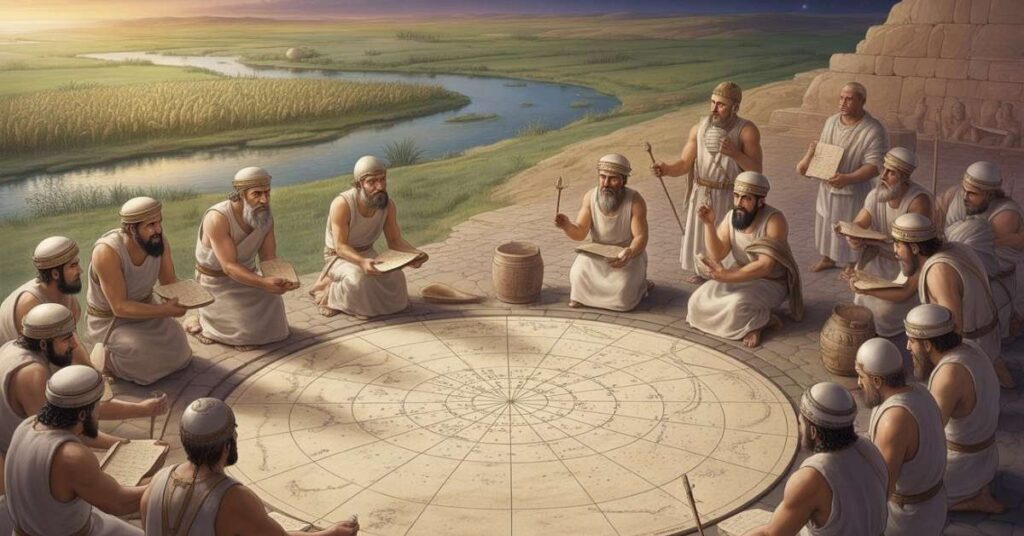
Astrology first emerged in ancient Mesopotamia, where people carefully observed the movements of the Sun, Moon, and planets. They noticed repeating patterns in the sky that aligned with seasonal changes, floods, and harvest times. These observations were recorded on clay tablets and tied to myths about gods and animals, giving the stars meaning beyond simple navigation. This early system laid the foundation for dividing the sky into twelve sections the precursor to the zodiac signs we use today.
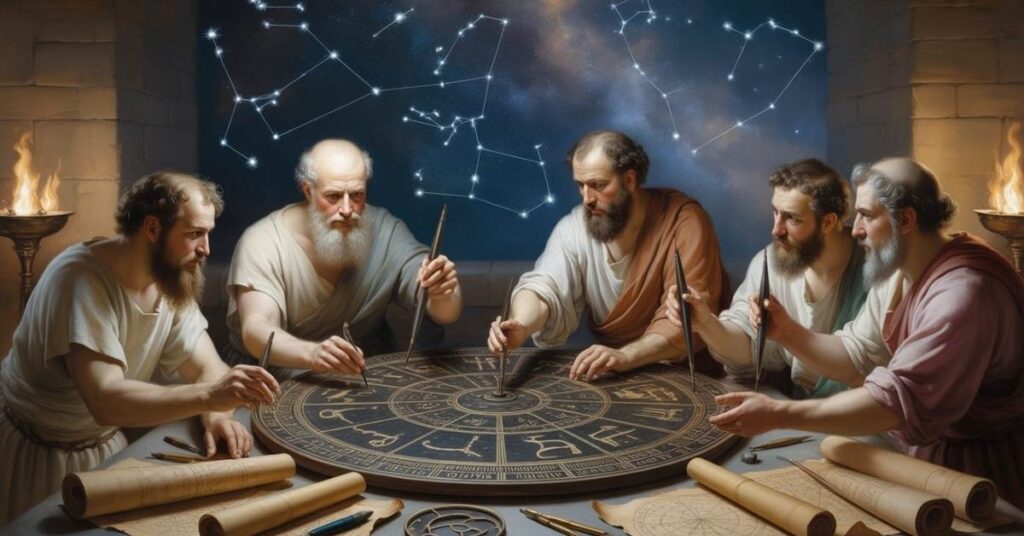
As the knowledge spread to Greece, scholars adapted these Babylonian charts into a more symbolic framework. They added mathematics, philosophy, and a focus on human personality, turning astrology into a tool for personal guidance rather than just a calendar. By combining observations with interpretations of fate and character, the Greeks created a zodiac system that could travel across cultures and survive for centuries.
Mesopotamian Star Maps
Mesopotamians divided the sky into segments to track planets and the Sun’s path, linking each section to myths about gods and animals. This helped communities understand seasonal changes and plan farming activities.
- Guided agricultural decisions and seasonal planning.
- Observations were recorded on clay tablets, forming early almanacs.
Greek Zodiac Innovations
Greek scholars translated Babylonian signs into their mythology and introduced houses and degrees to refine predictions. Astrology became more focused on personality and personal destiny.
- Mathematical angles and chart systems allowed detailed horoscopes.
- Zodiac readings became popular in city life and private consultations.
Birthplace of Astrology: Early Civilizations
Astrology’s roots trace back to some of the world’s earliest civilizations, where humans sought to make sense of the sky. In Babylon, priests observed the movements of stars and planets to predict seasonal shifts, harvest times, and political events. Similarly, ancient Egyptians connected celestial patterns to their calendar, gods, and the Nile’s flooding cycle, blending astronomy with spirituality to guide everyday life.
At the same time, Indian scholars developed the sidereal zodiac, linking planetary positions to human traits and destiny. These early systems were not isolated they influenced one another through trade and conquest. Together, these civilizations created a rich foundation for astrology, combining observation, myth, and early mathematics that shaped future generations.
Babylonian Sky Watchers
Babylonian priests divided the sky into segments and studied planetary movements to forecast events. Their charts became a guide for kings, farmers, and religious rituals.
- Created early star charts used for predictions.
- Recorded omens in cuneiform tablets for reference.
Egyptian Celestial Wisdom
Egyptians tied astronomy to their calendar and deities, predicting Nile floods and agricultural cycles. Constellations often represented gods, connecting cosmic events to daily life.
- Developed a calendar aligned with the stars for farming.
- Used celestial observations in religious ceremonies and architecture.
Pioneers of Astrology: Key Thinkers
Astrology evolved as brilliant minds in history studied the heavens and gave structure to its practice. Ptolemy, a Greco-Egyptian scholar, compiled planetary data and introduced mathematical rules for casting charts, creating a foundation still referenced in traditional astrology today. His work combined observation with theory, making astrology more precise and systematic.
Other Hellenistic philosophers and later Islamic scholars preserved and expanded this knowledge. They translated texts, refined calculations, and added philosophical interpretations. Their contributions spread astrology across continents, ensuring it influenced science, medicine, and culture for centuries.
Contributions of Ptolemy
Ptolemy wrote the “Tetrabiblos,” a foundational text connecting planetary positions to human personality and fate. His system organized planets, signs, and houses into a predictable framework.
- Introduced mathematical rules for chart casting.
- Linked celestial patterns to personal traits and life events.
Hellenistic and Islamic Scholars
Greek and Islamic scholars translated and expanded Ptolemy’s work, adding refinements in calculations and interpretations. They ensured astrology survived beyond its original regions.
- Refined degrees, aspects, and house systems for accuracy.
- Spread astrology through translations and teaching in cities.
Horoscopes in Antiquity: Early Prediction Methods
In ancient times, horoscopes were more than daily readings they were tools for understanding fate and planning important events. Babylonian astrologers cast nativities to predict kings’ fortunes and city outcomes, recording planetary alignments meticulously. These early charts connected human life to celestial events, showing that astrology was deeply integrated into society.
In Greece and Rome, horoscopes became accessible to ordinary citizens. Greek scholars refined the methods, adding houses and aspects, while Romans used them for personal guidance and political decisions. The practice laid the groundwork for the modern horoscope, combining observation, calculation, and interpretation.
Babylonian Nativities
Babylonians charted births and planetary positions to forecast the future for rulers and communities. They emphasized omens that could influence public and personal life.
- Recorded detailed planetary positions for predictions.
- Interpreted celestial events for political and social planning.
Greek and Roman Horoscopes
Greek astrologers introduced houses and aspects to refine readings, and Romans adopted these charts for everyday guidance. Astrology became both a public and personal tool.
- Offered predictions for individuals and city-states.
- Popularized horoscope reading among common citizens.
Astrology in Royal Courts and Alchemy
During the medieval period, astrology became a vital part of royal courts across Europe. Kings and nobles relied on astrologers to advise on wars, marriages, and political decisions. Astrology was seen as a respected science, blending observation of the heavens with practical guidance for rulers.
At the same time, astrology was closely linked to alchemy. Scholars connected planets with metals and chemical processes, believing cosmic patterns influenced the physical world. This blend of astrology and alchemy shaped early scientific thought and contributed to the development of chemistry and medicine.
Court Astrologers
Royal courts employed astrologers to plan key events and guide political strategies. Astrologers held influence as advisors and interpreters of the stars.
- Predicted important events like coronations and battles.
- Offered counsel on personal and political decisions.
Astrology and Alchemy
Planets were associated with metals and elements, connecting celestial patterns to physical experiments. Astro guided alchemical studies in pursuit of knowledge and transformation.
- Linked planets to metals, medicines, and chemical processes.
- Influenced early scientific and philosophical ideas.
Astrology Across Cultures: Global Traditions
Astrology did not develop in a single region it flourished in multiple civilizations, each adding unique perspectives. In China, the lunar zodiac linked animals to years and influenced personality traits, festivals, and decisions. Meanwhile, Persian and Arabic scholars preserved Greek astrology, adding new interpretations and mathematical refinements that shaped medieval astrology.
Trade, conquest, and cultural exchange spread these systems, allowing different civilizations to influence one another. The result was a rich, global tradition where celestial patterns guided not only individuals but entire societies. These diverse approaches laid the groundwork for the astrology we know today.
The Chinese Lunar Zodiac
China developed a twelve-animal zodiac linked to the lunar calendar, shaping cultural events, astrology readings, and personality predictions.
- Each year corresponds to an animal with unique traits.
- Influences decisions, festivals, and personal compatibility.
Persian and Arabic Contributions
Persian and Arabic scholars translated Greek texts and refined calculations, preserving astrology through the medieval period. Their work introduced new methods and interpretations.
- Added advanced mathematical models for planetary positions.
- Spread astrology through education, trade, and manuscripts.
Astrology’s Role in Medicine and Early Science
In the past, astrology and medicine were closely linked, as doctors believed celestial movements influenced the human body. Physicians used the positions of planets and signs to determine the best times for treatments, surgeries, and herbal remedies. Astrology helped early practitioners make sense of illnesses and body cycles when scientific knowledge was limited.
Beyond medicine, astrology also shaped early scientific thinking. Scholars observed patterns in the heavens, recorded data, and developed calculations that eventually influenced astronomy, mathematics, and natural philosophy. This connection between stars and science helped astrology remain a respected field for centuries.
Planetary Influence on Health
Doctors studied how planets affected different body parts and humors, timing treatments based on celestial alignments.
- Linked zodiac signs to specific organs and humors.
- Determined optimal times for surgeries and remedies.
Astrology in Early Scientific Thought
Astrologers kept precise records of planetary movements, influencing mathematical and astronomical discoveries.
- Developed calculations that improved observational astronomy.
- Contributed to the study of cycles, patterns, and predictive methods.
Astrology, Faith, and Philosophy: A Shared History
Astrology has long intersected with religion and philosophy, influencing beliefs about destiny and the universe. In Neoplatonism, celestial bodies were seen as reflections of a divine order, linking human life to cosmic harmony. Early Christian and Jewish thinkers debated astrology’s role, with some embracing its insights and others criticizing its predictive claims.
Islamic philosophers integrated astrology with theology and science, refining calculations while exploring moral and philosophical implications. Across cultures, astrology became a bridge between observation of the heavens and understanding human nature, shaping ethical, spiritual, and intellectual thought.
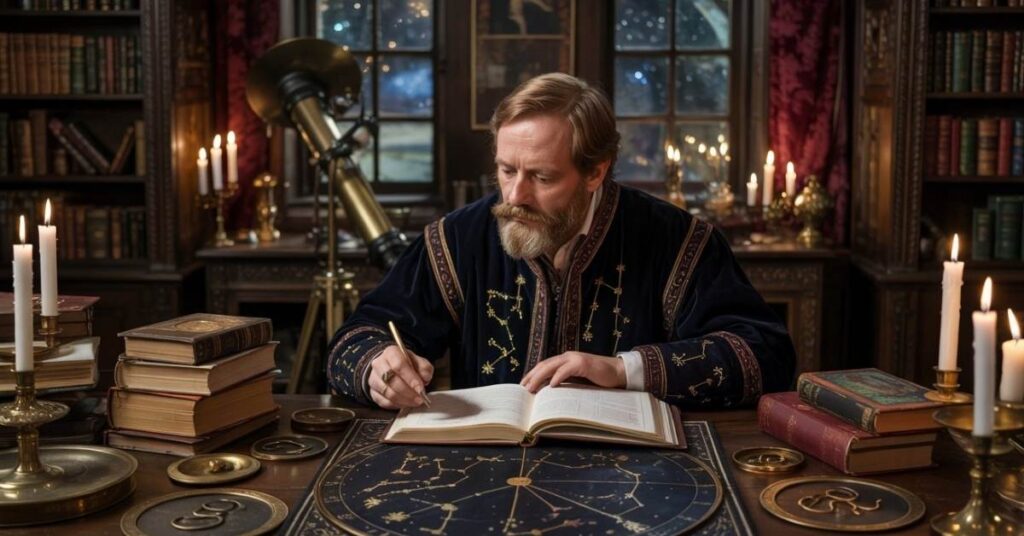
Neoplatonism and Cosmic Order
Philosophers viewed the stars as reflections of a divine, orderly universe, guiding human behavior and fate.
- Connected celestial patterns to moral and ethical principles.
- Saw astrology as a tool for understanding universal harmony.
Religious Perspectives on Astrology
Early religious scholars debated astrology’s influence, balancing acceptance with skepticism. Some incorporated it into spiritual guidance, others warned against determinism.
- Influenced theological discussions on fate and free will.
- Integrated astrology selectively in religious practices.
Renaissance Transformation: New Ideas in Astrology
During the Renaissance, astrology experienced a revival as scholars combined classical knowledge with new discoveries. The invention of the printing press made horoscopes and almanacs widely available, spreading knowledge beyond the elite. Humanist thinkers incorporated astrology into philosophy, medicine, and art, blending empirical observation with symbolic interpretation.
Astrology evolved from rigid prediction to a more analytical and personal tool. Astronomers of the time studied planetary motions carefully, ensuring calculations were accurate while maintaining astrology’s interpretive and cultural relevance.
Printing Press and Almanacs
The printing press allowed astrologers to publish horoscopes and almanacs for a broader audience, making celestial guidance accessible to everyday people. This innovation transformed astrology into both a scholarly and popular practice.
- Increased public access to horoscopes and planetary charts.
- Spread knowledge quickly across Europe and beyond.
Humanism Meets Astrology
Renaissance humanists integrated astrology into medicine, philosophy, and the arts, emphasizing observation and interpretation. Astrology began to reflect personal character as well as cosmic order.
- Supported scientific observation while maintaining symbolic meaning.
- Influenced medicine, art, and intellectual debates.
The Old Zodiac Systems and Forgotten Signs
Before the twelve-sign system became standard, several civilizations had alternative zodiac arrangements. Early Babylonian charts used different constellations and sometimes included additional signs. These variations reflected local myths, seasonal cycles, and cultural priorities, showing that astrology was a flexible system adapted to each society’s needs.
Over time, Greek and later Hellenistic astrologers refined the zodiac into the twelve-sign model we know today. Some old signs and constellations fell out of use, but they influenced naming, symbolism, and interpretations that survive in modern astrology.
Early Babylonian Sign Names
Babylonians originally identified constellations and stars differently, sometimes including extra signs or omitting familiar ones. Their system focused on seasonal and agricultural cycles.
- Sign names reflected local mythology and celestial phenomena.
- Charts guided planting, navigation, and ritual activities.
Variations in Vedic and Arabic Lists
Indian and Arabic astrologers preserved alternative signs and refined calculations, blending earlier systems with new mathematical methods. Some signs were modified or renamed over time.
- Adapted ancient zodiac knowledge to local culture and tradition.
- Influenced degrees, aspects, and house systems in later astrology.
The Decline of Astrology as an Academic Science
Astrology’s influence began to fade during the Scientific Revolution as observation and experimentation became the standard for understanding the natural world. Scholars started separating astronomy from astrology, treating the study of celestial bodies as a precise science while viewing predictions about human behavior with skepticism.
Despite its decline in universities, astrology remained popular among the general public. Philosophers and scientists debated its validity, and new methods of inquiry gradually replaced astrological explanations for natural phenomena. However, its historical impact on medicine, science, and culture remained undeniable.
Scientific Revolution and Skepticism
The rise of empirical science questioned astrology’s predictive claims, emphasizing experimentation and observation over celestial interpretation.
- Astronomy became a distinct field focused on measurable phenomena.
- Astrology lost academic credibility but stayed culturally significant.
Separation of Astronomy and Astrology
As calculations became more precise, scholars distinguished astronomy’s data-driven approach from astrology’s interpretive predictions.
- Scholars focused on planetary motion and celestial mechanics.
- Astrological charts shifted from scientific authority to cultural and personal guidance.
Horoscopes Today: The Modern Comeback
Astrology has made a remarkable return in modern culture, moving from scientific skepticism to everyday entertainment and personal guidance. Newspaper columns, social media, and apps have made horoscopes accessible to millions, blending ancient symbolism with contemporary lifestyle advice. Today, people consult astrology for love, career, health, and self-reflection rather than strict prediction.
This resurgence also shows how astrology adapts to new technologies and trends. Modern astrologers combine traditional techniques with digital tools, creating personalized charts and interactive readings that resonate with a global audience. Astrology has shifted from scholarly pursuit to a widely embraced tool for insight and inspiration.

Newspaper Columns and Sun Signs
Newspapers popularized astrology in the 20th century, offering daily sun-sign horoscopes that became a cultural staple. These columns simplified complex charts for everyday readers.
- Provided accessible advice based on zodiac signs.
- Introduced astrology to mass audiences worldwide.
Digital Apps and Pop Culture
Astrology apps and social media platforms have expanded its reach, offering personalized readings and interactive features. Pop culture references keep the zodiac relevant.
- Allows users to track planetary movements and get daily insights.
- Engages younger audiences through apps, memes, and lifestyle content.
Summary
Astrology has evolved from ancient star observations to a modern guide for personal insight. From Mesopotamian charts and Greek innovations to royal courts, medicine, and global traditions, the zodiac shaped culture, science, and philosophy. Despite a decline during the Scientific Revolution, horoscopes have returned in newspapers, apps, and pop culture, keeping the cosmic connection alive today.