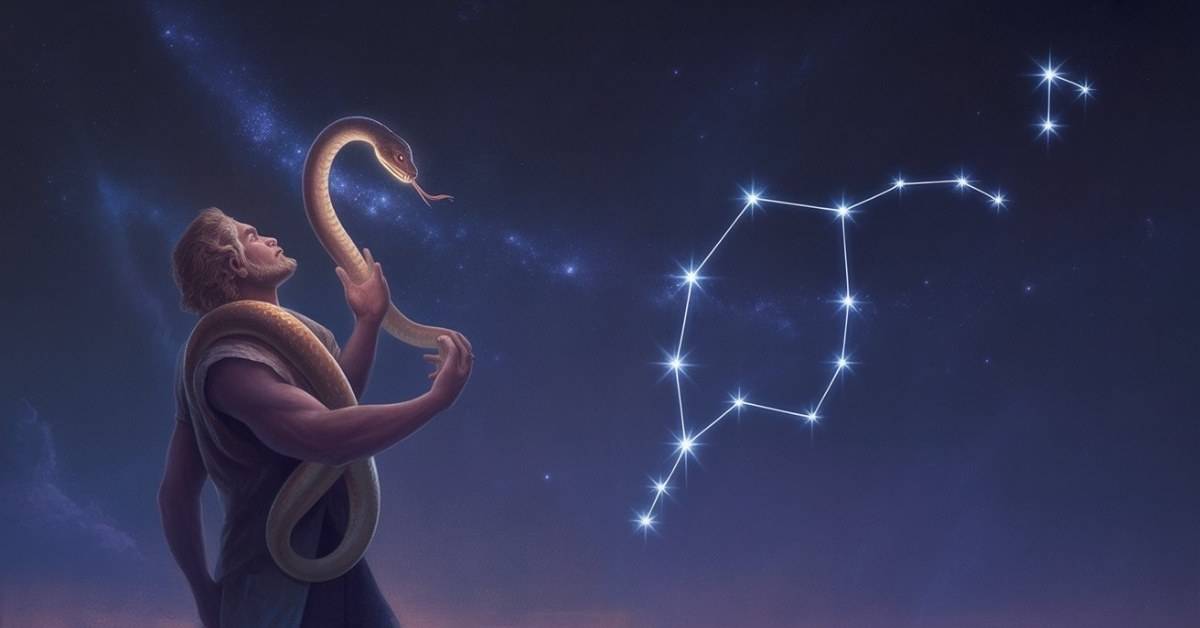
The truth behind Ophiuchus 13th has made many people question whether astrology got something wrong. Over time, viral claims transformed this little-known constellation into a so-called missing zodiac sign, which created confusion around birth dates and horoscopes. However, Ophiuchus exists in the sky, not in traditional astrology. Once you understand the difference between astronomy and astrology, most of the mystery quickly fades.
What Is Ophiuchus?
Ophiuchus is a large constellation that sits along the ecliptic, the path the Sun appears to travel across the sky. It lies between Scorpio and Sagittarius and carries the name “Serpent Bearer,” a title rooted in ancient mythology. Astronomers have recognized Ophiuchus for centuries. Still, Western astrology does not include it in the traditional twelve-sign zodiac, which often leads to misunderstanding.
Moreover, the Sun passes through Ophiuchus for several days each year. As a result, many people assume their zodiac sign should change. However, astrology divides the sky into twelve equal symbolic signs instead of using actual constellation sizes. For this reason, astrology acknowledges Ophiuchus astronomically but excludes it from horoscopes and birth charts.
What Does Ophiuchus Mean in Astronomy?
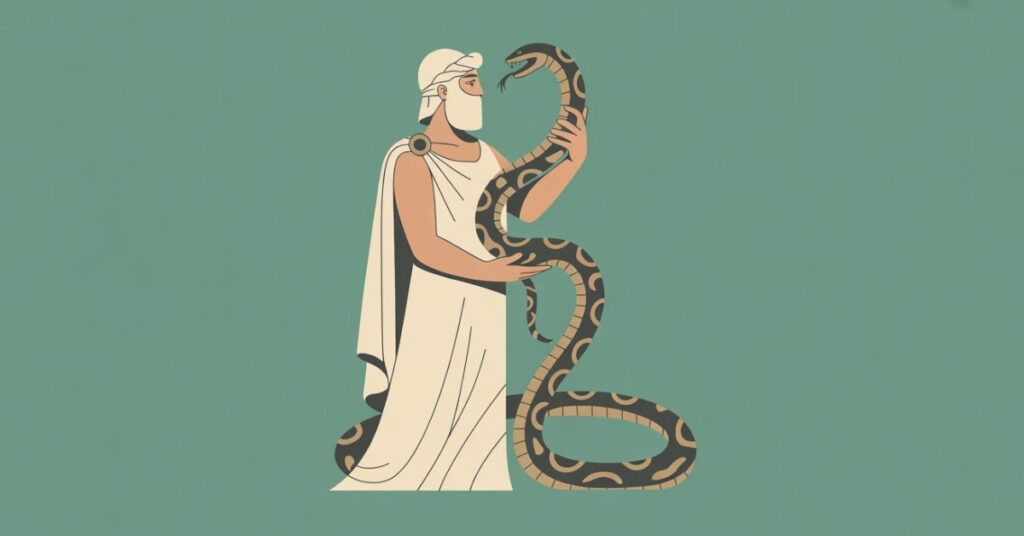
In astronomy, Ophiuchus represents the Serpent Bearer and connects to the Greek healer Asclepius, who legends say could heal the sick and revive the dying. The International Astronomical Union officially recognizes the constellation, and the Sun moves through it roughly from late November to mid-December. Altogether, its symbolism emphasizes healing, wisdom, and transformation.
- Recognized as one of the 88 official constellations
- Symbolizes healing and knowledge in mythology
- Sun moves through it from late November to mid-December
What Is Ophiuchus in Astrology?
In astrology, Ophiuchus does not belong to the traditional twelve-sign zodiac. Western astrologers divide the sky into twelve equal segments based on seasonal cycles. Because of this structure, Ophiuchus does not appear in horoscope charts. Although some people refer to it as a “13th sign,” it carries no official traits, ruling planet, or astrological influence.
- Not included in traditional horoscope charts
- Lacks assigned personality traits in Western astrology
- Lies outside the twelve-sign zodiac system
How Western Astrology Works
Western astrology operates as a symbolic system that divides the year into twelve zodiac signs, each tied to a specific solar period. Instead of tracking real constellation sizes, astrology uses these signs to interpret personality traits, emotional tendencies, and life patterns. This approach allows astrologers to create consistent birth charts based on seasonal meaning.
Additionally, astrology analyzes the positions of the Sun, Moon, and planets within these signs. Astrologers use these placements to interpret relationships, personal strengths, and potential challenges. While astronomy measures celestial objects precisely, astrology focuses on symbolic meaning. Therefore, constellations like Ophiuchus remain visible in the sky but excluded from zodiac charts.
Tropical Zodiac Explained
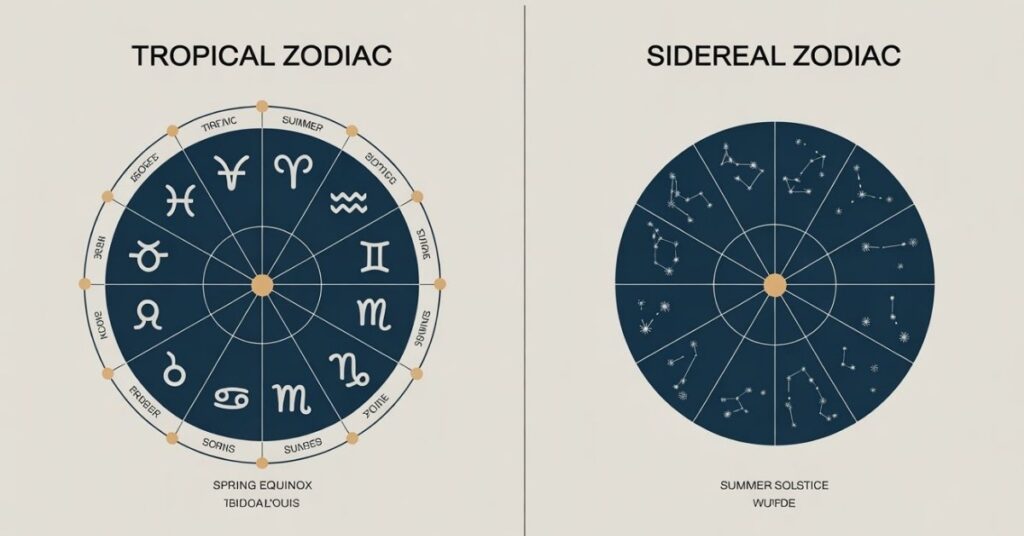
The tropical zodiac remains the most widely used system in Western astrology. It aligns zodiac signs with Earth’s seasons rather than the stars themselves. As a result, Aries always begins at the spring equinox, even though star positions slowly shift over time. This system keeps astrological readings consistent year after year.
- Divides the zodiac according to seasonal cycles, not stars
- Aries always begins at the spring equinox
- Basis for most Western horoscopes
Sidereal Zodiac Explained
The sidereal zodiac, used mainly in Vedic astrology, aligns signs with actual constellations in the sky. It accounts for the gradual wobble of Earth’s axis, known as precession. Because of this adjustment, sidereal astrology often places Sun signs about one sign earlier than Western astrology.
- Based on actual star positions in the sky
- Accounts for precession of the equinoxes
- Commonly used in Vedic and Eastern astrology
Why There’s No 13th Zodiac Sign
Many people ask why astrology does not include Ophiuchus, even though the Sun passes through it. The reason lies in astrology’s structure. Western astrology divides the sky into twelve equal signs that align with Earth’s seasonal rhythm, not with constellation size or number.
Furthermore, adding a 13th sign would disrupt the balance of the zodiac. It would affect birth charts, planetary rulerships, and traditional interpretations. Astrology depends on consistent divisions, so introducing Ophiuchus would create confusion rather than clarity.
Why Astrology Uses Only 12 Signs
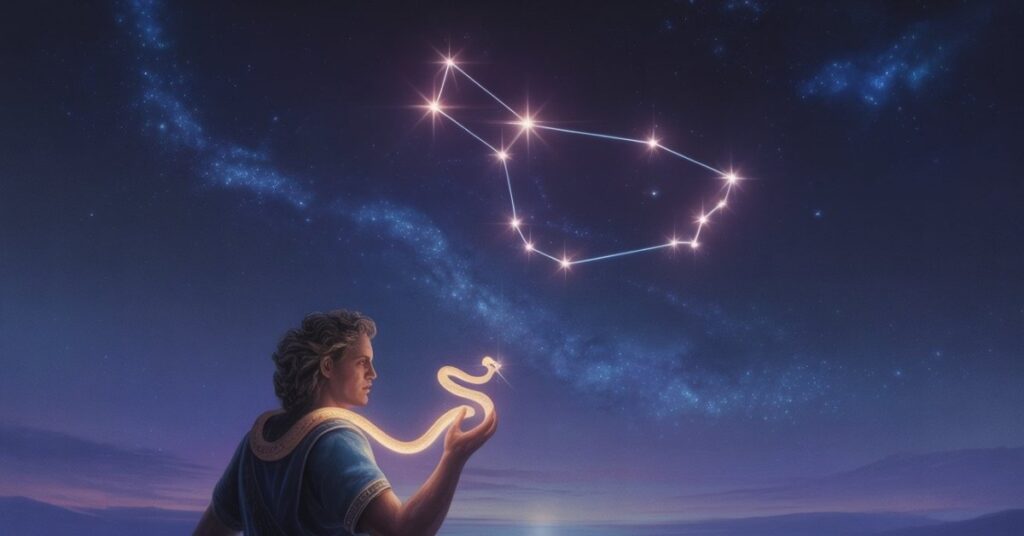
Western astrology follows a twelve-sign framework because it mirrors the yearly cycle and seasonal phases. Each sign represents roughly one month, which keeps interpretations organized and readable. Since astrology relies on symbolism rather than literal star positions, the focus stays on meaning instead of astronomy.
- Each sign represents about one month of the solar year
- Aligns with Earth’s seasonal cycle, not star size
- Keeps astrology consistent and readable
Why Ophiuchus Is Not Included in Horoscopes
Astrology excludes Ophiuchus because it does not assign traits based on physical constellation paths. The Sun’s short passage through Ophiuchus does not fit into the twelve equal divisions astrology requires. As a result, horoscopes ignore it to preserve interpretive consistency.
- No personality traits assigned in Western astrology
- Does not influence daily or monthly horoscopes
- Recognized in astronomy but irrelevant for zodiac charts
Is Ophiuchus a Real Zodiac Sign?
Ophiuchus often appears in discussions as a “13th zodiac sign,” but it does not officially exist in Western astrology. Although the constellation is real, astrology relies on symbolic seasonal divisions. Therefore, Ophiuchus holds no formal place in horoscope systems.
Additionally, the Sun passes through Ophiuchus for about 18 days each year. However, this astronomical fact does not qualify it as a zodiac sign. The twelve-sign system has remained stable for centuries, and astrologers continue to rely on it for interpretation.
Scientific Perspective on Ophiuchus
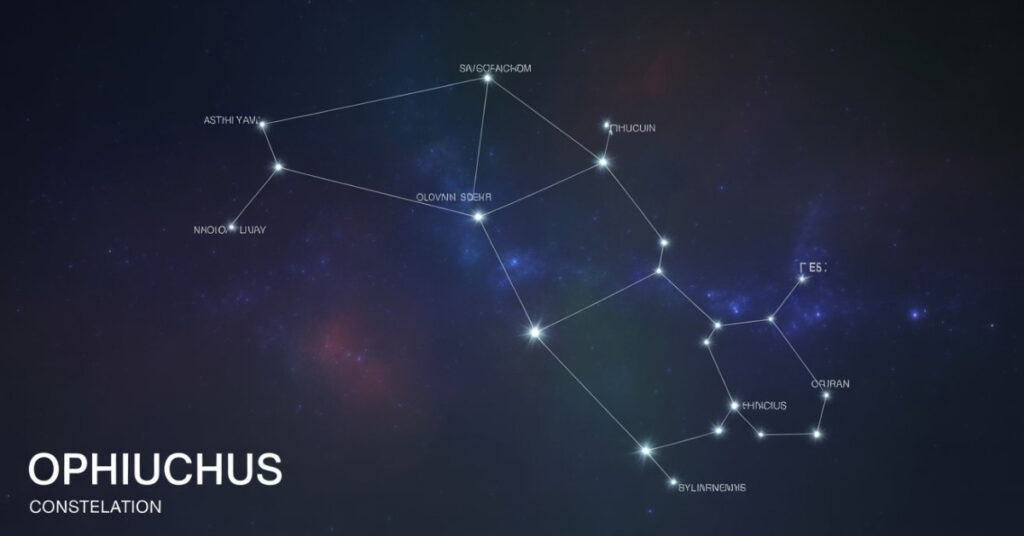
From a scientific standpoint, Ophiuchus is a genuine constellation along the ecliptic. Astronomers have fully mapped it, and the International Astronomical Union officially recognizes it. Scientists study it like any other constellation, focusing on its stars, location, and history.
- Recognized as one of the 88 official constellations
- Lies along the Sun’s path for part of the year
- Studied for its stars, mythology, and coordinates
Astrological Perspective on Ophiuchus
Astrologically, Ophiuchus does not qualify as a zodiac sign because it does not fit within the twelve-sign structure. Western astrology prioritizes symbolic meaning over physical placement. Consequently, astrologers do not assign traits, planets, or compatibility to Ophiuchus.
- Not included in Western zodiac charts
- Lacks assigned traits or rulership
- Considered outside standard astrology practices
Ophiuchus Dates and Birthdays
Ophiuchus is said to fall between Scorpio and Sagittarius, with the Sun passing through it roughly from November 29 to December 17. People born during these dates are sometimes labeled as “Ophiuchus,” though this is not recognized in traditional Western astrology. The confusion comes from mixing astronomical constellations with symbolic zodiac divisions.
Even though Ophiuchus has specific astronomical dates, Western horoscopes do not change your Sun sign. Astrology continues to use the twelve-sign system based on seasons, so anyone born in this period is officially Scorpio or Sagittarius according to standard charts. Understanding this distinction helps clarify why the 13th zodiac idea never affects horoscope readings.
What Birthday Is Ophiuchus?
Ophiuchus covers those born roughly between late November and mid-December. However, since Western astrology ignores this sign, your zodiac label remains consistent. People curious about Ophiuchus often identify with its traits, but officially, astrology still places them under Scorpio or Sagittarius.
- Sun passes through Ophiuchus roughly Nov 29 – Dec 17
- Does not alter your official Western zodiac sign
- Often mistaken for a new or hidden 13th zodiac
Am I Ophiuchus or Sagittarius?
Many wonder whether they are truly Ophiuchus or Sagittarius if born during this period. In Western astrology, the zodiac is seasonal, not constellation-based. Therefore, someone born in early December is still a Sagittarius, even if the Sun is astronomically in Ophiuchus. People can explore Ophiuchus traits for curiosity, but it doesn’t replace their zodiac sign.
- Birth charts remain based on the twelve-sign system
- Ophiuchus traits are optional for self-exploration
- Zodiac identity doesn’t officially change
The Ophiuchus Zodiac Symbol and Meaning
The symbol of Ophiuchus is called the “Serpent Bearer,” representing a person holding a snake. In mythology, it is associated with Asclepius, the Greek healer who could bring the dead back to life. This symbolism reflects transformation, wisdom, and the power of healing, making Ophiuchus unique among constellations.
While Ophiuchus is not part of the Western zodiac, its symbol is widely recognized in astronomy and astrology discussions. Many people identify with the traits represented by the Serpent Bearer, including curiosity, intelligence, and a desire to help others. The symbol highlights the constellation’s connection to knowledge and renewal.
The Serpent Bearer Symbol Explained
The Serpent Bearer shows a figure holding a serpent, a traditional symbol of medicine and transformation. In ancient cultures, snakes represented healing and regeneration because they shed their skin and symbolized renewal. Ophiuchus’ symbol reflects these themes and emphasizes personal growth and wisdom.
- Represents healing, transformation, and knowledge
- Connected to Greek mythology and Asclepius
- Serpent symbolizes renewal and rebirth
Mythology Behind the Ophiuchus Symbol
In mythology, Ophiuchus is tied to Asclepius, who learned the secrets of life and death from observing serpents. Legends suggest he could heal the sick and even revive the dead, which is why the constellation is seen as a symbol of medicine and wisdom. While not used in astrology charts, this mythology gives Ophiuchus a rich symbolic meaning.
- Linked to Asclepius, the Greek healer
- Snakes symbolize knowledge, medicine, and rebirth
- Highlights wisdom, healing, and transformation
Ophiuchus Personality Traits
Ophiuchus personalities are often described as curious, independent, and highly intelligent. People born under this constellation (or who identify with it) are said to seek knowledge, value truth, and have a strong desire to help others. While Western astrology does not officially recognize Ophiuchus, many enthusiasts study its traits for self-discovery.
These individuals are also known for being adaptable and open-minded, often exploring new ideas and experiences. Their love for learning and self-improvement sets them apart, making them natural problem-solvers and guides in social or professional circles.
Core Personality Traits of Ophiuchus
Ophiuchus is associated with intelligence, curiosity, and a deep sense of compassion. People who identify with this sign are often natural healers and seek personal growth. They are ambitious but also value wisdom and ethical behavior in themselves and others.
- Highly intelligent and curious
- Compassionate and ethical
- Natural problem-solvers and healers
Is Ophiuchus a Mix of Scorpio and Sagittarius?
Because Ophiuchus falls between Scorpio and Sagittarius astronomically, some believe its traits blend qualities of both signs. It is thought to combine Scorpio’s intensity and determination with Sagittarius’ optimism and adventurous spirit. However, these interpretations are symbolic, not official astrology.
- Shares Scorpio’s depth and focus
- Shares Sagittarius’ curiosity and love for exploration
- Represents a balance of intensity and freedom
Ophiuchus in Life and Relationships
Ophiuchus individuals are known for their passion and sincerity in relationships. They value honesty and deep connections, often seeking partners who share their curiosity and love of learning. While not officially recognized in astrology, many people relate to Ophiuchus traits when exploring compatibility and romantic dynamics.
In their careers and daily life, Ophiuchus personalities are ambitious and driven. They tend to pursue goals that align with their values and enjoy helping others succeed. Their adaptable nature and problem-solving skills make them valuable team members and trusted friends.
Ophiuchus in Love and Compatibility
Ophiuchus people are loyal, honest, and emotionally expressive in relationships. They thrive with partners who respect their independence and share their intellectual curiosity. Their desire for meaningful connections often leads them to seek long-term commitment and mutual growth.
- Loyal, honest, and emotionally expressive
- Values intellectual and emotional connection
- Seeks long-term meaningful partnerships
Ophiuchus in Career and Health
Ophiuchus personalities excel in careers requiring problem-solving, teaching, or healing. They are adaptable and ambitious, often drawn to roles where they can make a difference. Maintaining balance is essential, as their drive can sometimes lead to stress or overwork.
- Thrive in problem-solving or healing professions
- Ambitious and adaptable in professional settings
- Need to balance work and personal wellness
Why Is Ophiuchus So Rare?
Ophiuchus is considered rare in astrology discussions because it is not part of the traditional twelve-sign zodiac. While astronomically real, it passes through the Sun’s path for only a short period each year, making it unfamiliar to most horoscope readers. This rarity has sparked curiosity and a sense of mystery around the 13th zodiac sign.
The idea of Ophiuchus as a zodiac sign is further complicated by Western astrology’s focus on symbolic divisions rather than actual constellations. Most astrologers do not use Ophiuchus in birth charts, which adds to its perceived rarity and exclusivity among astrology enthusiasts.
Why Most People Don’t Know About Ophiuchus
Many people are unaware of Ophiuchus because Western astrology only teaches twelve zodiac signs. Media coverage and viral posts may highlight it as the “hidden 13th sign,” but traditional astrology systems do not incorporate it. Its brief Sun passage and exclusion from charts make it largely unknown to the general public.
- Ignored in standard Western astrology
- Sun passes through it for only a short period
- Often confused as a “hidden” or secret zodiac sign
How Do You Pronounce Ophiuchus?
Ophiuchus is pronounced “oh-FYOO-kus” or “oh-FYOO-uh-kus,” depending on regional variation. The name comes from Greek, meaning “serpent-bearer,” which reflects the constellation’s mythological symbolism. Pronunciation can be tricky for beginners, which adds to its mysterious reputation in astrology discussions.
- Pronounced “oh-FYOO-kus” or “oh-FYOO-uh-kus”
- Name means “serpent-bearer” in Greek
- Adds to its mysterious and rare aura
Final Thoughts
Ophiuchus continues to fascinate people as the so-called “13th zodiac sign,” but while it exists astronomically, it is not part of the traditional twelve-sign Western zodiac. Exploring its symbolism can offer insight into personal growth, curiosity, and transformation, yet it does not replace your official zodiac sign or alter standard horoscope readings.